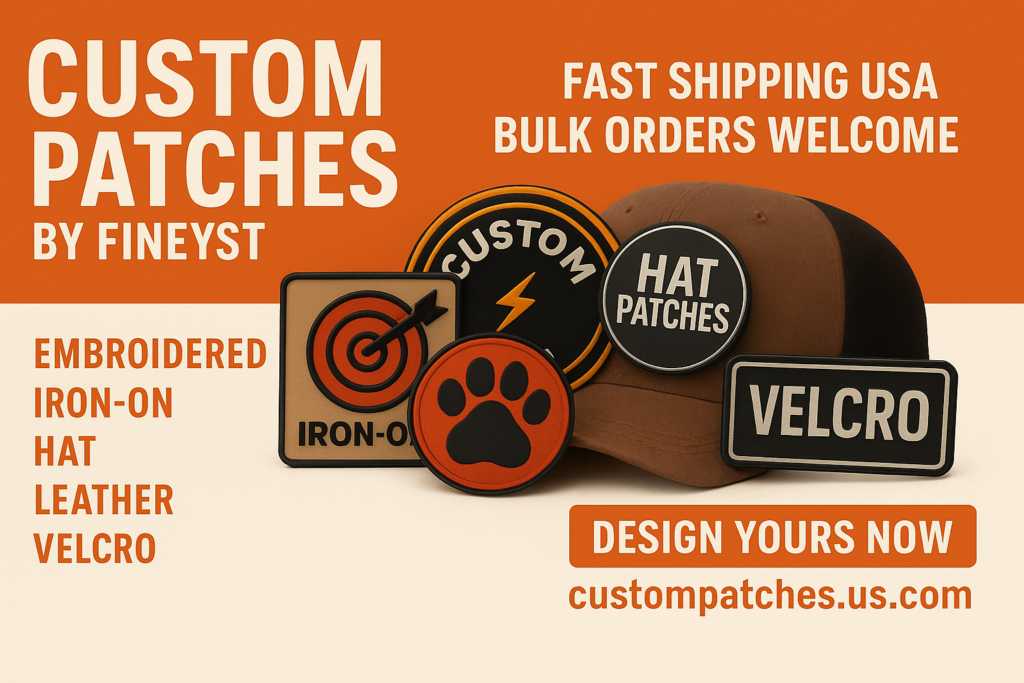

A B2B Production Process for Custom Patches and Embroidered Patches
Custom patches are widely used by businesses, apparel brands, uniform suppliers, sports teams, and promotional companies. They offer a durable and cost effective way to display logos, identification, and branding across clothing and accessories. Understanding how custom patches are made helps B2B buyers select the right materials, backing options, and production methods for long term use.
Design Setup and Digitizing
The production process begins with artwork preparation. Businesses provide a logo, text, or design concept, which is converted into a stitch ready embroidery file. This step is known as digitizing. Digitizing controls stitch direction, density, and sequencing, which directly affects the appearance and durability of embroidered patches.
Accurate digitizing ensures clean lettering, smooth curves, and consistent results across bulk orders. For businesses ordering large quantities of custom patches, this step plays a critical role in maintaining brand consistency.
Fabric and Thread Selection
Most embroidered patches use twill fabric as the base material. Twill is chosen for its strength, flexibility, and ability to hold embroidery stitches securely. High quality polyester threads are used for stitching because they resist fading, moisture, and wear.
Thread colors are matched to brand specifications, often using Pantone references. This guarantees color consistency across uniforms, merchandise, and promotional products.
Embroidery Production
Once the design and materials are finalized, industrial embroidery machines stitch the design onto the fabric. Stitch coverage varies based on design and budget requirements. Full embroidery produces a raised and textured look, while partial embroidery allows visible fabric areas to reduce stitch count and production costs.
Partial embroidery is commonly selected for bulk B2B orders without compromising durability.
Cutting and Border Finishing
After embroidery, patches are cut into their final shape using laser cutting or die cutting techniques. Borders are added to prevent fraying and enhance durability. Merrowed borders are commonly used for standard shapes, while heat cut edges are preferred for custom shapes.
Backing Application
Backing options depend on how the custom patches will be applied. Sew on backing offers permanent attachment, iron on backing allows easy application, Velcro backing provides removability, and adhesive backing supports temporary use.
Businesses often select Velcro backing for uniforms and iron on backing for retail apparel.
Quality Inspection and Packaging
Each embroidered patch undergoes quality inspection for stitching accuracy, color consistency, and backing strength before packaging and shipment.
Request a quote today to order professionally made custom patches for your business.
Frequently Asked Questions About Custom Patches
How are custom patches made
Custom patches are made through design digitizing, embroidery, cutting, border finishing, and backing application.
What materials are used for embroidered patches
Embroidered patches are made from twill fabric and polyester embroidery threads.
How long does it take to produce custom patches
Production usually takes seven to ten business days after artwork approval.
Are embroidered patches suitable for uniforms
Yes, embroidered patches are durable and ideal for uniforms and workwear.
Can custom patches be ordered in bulk
Yes, custom patches are commonly produced in bulk for businesses and organizations.
Contact us now to start your custom patches order with reliable B2B production support.