
Question:
What Is the Total Number of Hadiths?
Answer:
It is difficult to determine the exact total number of Hadiths, and the scholars of Hadith have held different opinions on this matter.
The reason is that, according to the terminology of the Muhaddithin, a Hadith is not limited to only the sayings of the Prophet ﷺ. It also includes His actions, character, personal conditions, and the actions performed by others in His presence that He did not object to.
In addition, the statements of the Companions, the legal verdicts (Fatwas) of their jurists, the judicial decisions made during the era of the Caliphate, the Fatwas of the Tabi’un, their rulings as judges, and even explanatory notes on the verses of the Holy Quran have also been included in the collections of Hadith.
Allama Tahir bin Salih Al-Jaza’iri Al-Dimashqi (d. 1338 AH) writes:
إِن كثيراً من الْمُتَقَدِّمين كَانُوا يطلقون اسْم الحَدِيث على مَا يَشْمَل آثَار الصَّحَابَة وَالتَّابِعِينَ وتابعيهم وفتاويهم، ويعدون الحَدِيث الْمَرْوِيّ بِإِسْنَادَيْنِ حديثين۔
Translation:
The majority of the early scholars used the term Hadith not only for the reports of the Prophet ﷺ, but also for the narrations of the Companions (Sahabah), the Tabi’un, the Atba’ al-Tabi’in, and their legal verdicts (Fatwas). They also counted a Hadith narrated through two different chains of transmission as two separate Hadiths.
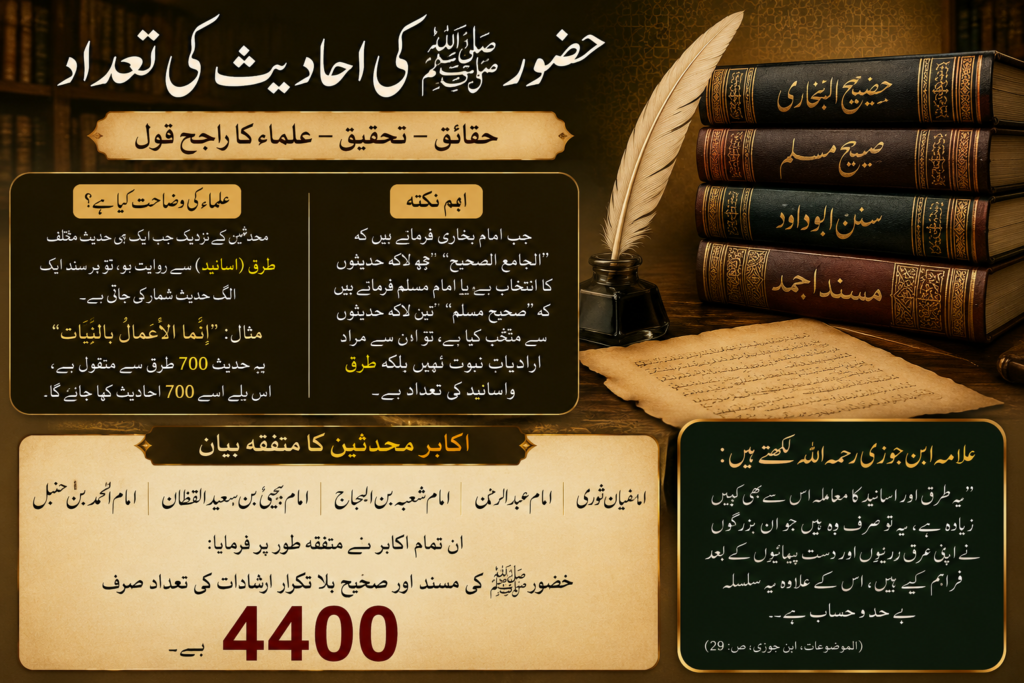
According to the scholars of Hadith, when a Hadith is transmitted through multiple chains of narration, each chain is counted as a separate Hadith. For example, the Hadith “إِنَّمَا الْأَعْمَالُ بِالنِّيَّاتِ” has been transmitted through seven hundred chains, so in the terminology of the Muhaddithin, it is counted as seven hundred Hadiths.
For this reason, Allama Ibn al-Jawzi رحمه الله (d. 597 AH) writes regarding the entire collection of Hadith:
فَالْجَوَاب أَن المُرَاد بِهَذَا الْعدَد الطّرق لَا الْمُتُون”۔ (تلقيح فهوم أهل الأثر (ص: 263)
This means that they were referring to the chains of narration (Turuq and Asanid) of the Hadiths, not to their actual texts (Matn.
This also explains the statements found in the books of Hadith principles. For example, Imam al-Bukhari said that the Hadiths included in Al-Jami’ al-Sahih were selected from six hundred thousand Hadiths. Imam Muslim stated that he selected the Hadiths of Sahih Muslim from three hundred thousand Hadiths. Imam Abu Dawud said that he had recorded five hundred thousand Hadiths, from which he selected those included in Sunan Abu Dawud. Likewise, Imam Ahmad stated that his collection was selected from seven hundred and fifty thousand Hadiths.
These statements do not mean that this was the total number of the sayings of the Prophet ﷺ. Rather, they refer to the number of chains of narration and transmission through which these narrations were reported.
In the history of Hadith, this is not an exaggeration. In fact, the number of chains of narration is far greater than this. These figures represent only the narrations that these great scholars collected after years of dedicated effort and extensive travel. If the work and memorization of other scholars of Hadith were also combined, the number would become countless.
For example, if during the time of the Tabi’un there were only forty thousand chains of narration, this number reached hundreds of thousands during the era of the Atba’ al-Tabi’in. This was because if one teacher narrated a Hadith to ten students, then according to the terminology of the Muhaddithin, those became ten separate chains of narration.
After the above explanation, the number of Musnad and Sahih Hadiths, excluding repeated narrations, is presented below according to the preferred opinion of the scholars of Hadith.
According to Hafiz Ibn Hajar رحمه الله, Imam Abu Ja’far Muhammad bin Al-Husayn Al-Baghdadi narrated in Kitab al-Tamyiz that leading scholars, including Imam Sufyan al-Thawri, Imam Shu’bah bin al-Hajjaj, Imam Yahya bin Sa’id al-Qattan, Imam Abd al-Rahman bin Mahdi, and Imam Ahmad bin Hanbal, unanimously stated:
ذكرها الحافظ ابن حجر عن أبي جعفر محمد بن الحسين البغدادي أنه قال في “كتاب التمييز” له عن النووي وشعبة ويحيى بن سعيد القطان وابن مهدي وأحمد بن حنبل: إن جملة الأحاديث المسندة عن النبي صلى الله عليه وسلم: يعني الصحيحة بلا تكرر أربعة آلاف وأربعمائة حديث۔
The total number of the Musnad and authentic (Sahih) sayings of the Prophet ﷺ, excluding repeated narrations, is four thousand four hundred (4,400).
توجيه النظر إلى أصول الأثر (1/ 230)
“قَالَ بعض أهل الْأَثر: إِن كثيراً من الْمُتَقَدِّمين كَانُوا يطلقون اسْم الحَدِيث على مَا يَشْمَل آثَار الصَّحَابَة وَالتَّابِعِينَ وتابعيهم وفتاويهم، ويعدون الحَدِيث الْمَرْوِيّ بِإِسْنَادَيْنِ حديثين، وَحِينَئِذٍ يسهل الْخطب وَكم من حَدِيث ورد من مئة طَرِيق فَأكْثر وَهَذَا حَدِيث إِنَّمَا الْأَعْمَال بِالنِّيَّاتِ نقل مَعَ مَا فِيهِ عَن الْحَافِظ أبي إِسْمَاعِيل الْأنْصَارِيّ الْهَرَوِيّ أَنه كتبه من جِهَة سبع مئة من أَصْحَاب يحيى بن سعيد، وَقَالَ الْإِسْمَاعِيلِيّ عقب قَول البُخَارِيّ: لم أخرج فِي هَذَا الْكتاب إِلَّا صَحِيحاً، وَمَا تركت من الصَّحِيح أَكثر، إِنَّه لَو أخرج كل حَدِيث صَحِيح عِنْده لجمع فِي الْبَاب الْوَاحِد حَدِيث جمَاعَة من الصَّحَابَة وَلذكر طرق كل وَاحِد مِنْهُم إِذا صحت فَيصير كتاباً كَبِيراً جداً۔ وَقَالَ الجوزقي: إِنَّه استخرج على أَحَادِيث الصَّحِيحَيْنِ فَكَانَت عدَّة الطّرق خَمْسَة وَعشْرين ألف طَرِيق وَأَرْبع مئة وَثَمَانِينَ طَرِيقاً”۔
النكت على مقدمة ابن الصلاح للزركشي (1/ 182)
وَقد ذكر أَبُو الْعَرَب فِي مُقَدّمَة كِتَابه الضُّعَفَاء عَن عَليّ بن بَقِي قَالَ: سَأَلت يحيى بن سعيد الْقطَّان كم جملَة الْمسند؟ فَقَالَ لي: حصل أَصْحَابنَا ذَلِك وَهُوَ ثَمَانِيَة آلَاف حَدِيث وفيهَا مُكَرر، قَالَ: وَسمعت إِسْحَاق بن رَاهَوَيْه يَقُول: سَأَلت جمَاعَة من أهل الْبَصْرَة عَن جملَة الْمسند الَّذِي رُوِيَ عَن النَّبِي صلى الله عَلَيْهِ وَسلم فَقَالُوا: سَبْعَة آلَاف ونيف، وَعَن غنْدر سَأَلت شُعْبَة عَن هَذَا، فَقَالَ: جملَة الْمسند أَرْبَعَة آلَاف ونيف۔
وناظر عبد الرَّزَّاق إِسْحَاق بن رَاهَوَيْه فِي ذَلِك، فَقَالَ إِسْحَاق: أَرْبَعَة آلَاف، وَقَالَ عبد الرَّزَّاق: أَقُول مَا قَالَه يحيى بن سعيد: الْمسند أَرْبَعَة آلَاف وَأَرْبَعمِائَة مِنْهَا ألف ومائتان سنَن وَثَمَانمِائَة (د 17) حَلَال وَحرَام وَأَلْفَانِ وَأَرْبَعمِائَة”۔
جامع العلوم والحكم ت الأرنؤوط (1/ 62)
وَعَنْ أَبِي دَاوُدَ، قَالَ: نَظَرْتُ فِي الْحَدِيثِ الْمُسْنَدِ، فَإِذَا هُوَ أَرْبَعَةُ آلَافِ حَدِيثٍ۔
توضيح الأفكار لمعاني تنقيح الأنظار (1/ 63)
“ذكرها الحافظ ابن حجر عن أبي جعفر محمد بن الحسين البغدادي أنه قال: في كتاب التمييز له عن النووي وشعبة ويحيى بن سعيد القطان وابن مهدي وأحمد بن حنبل: إن جملة الأحاديث المسندة عن النبي صلى الله عليه وسلم: يعني الصحيحة بلا تكرر أربعة آلاف وأربعمائة، حديث وعن اسحق بن راهوية أنه سبعة آلاف ونيف وقال أحمد بن حنبل: وسمعت ابن مهدي يقول: الحلال والحرام من ذلك ثمانمائة، وكذا قال اسحق بن راهويه عن يحيى بن سعيد، وذكر القاضي أبو بكر بن العربي أن الذي في الصحيحين من أحاديث الأحكام نحو ألفي حديث، وقال أبو بكر السختياني عن ابن المارك تسعمائة، وقال الحافظ: ومرادهم بهذه العدة ما جاء عن النبي صلى الله عليه وسلم من أقواله الصريحة في الحلال والحرام، وقال كل منهم بحسب ما وصل أليه، ولهذا اختلفوا.
والله أعلم فقط واللہ اعلم