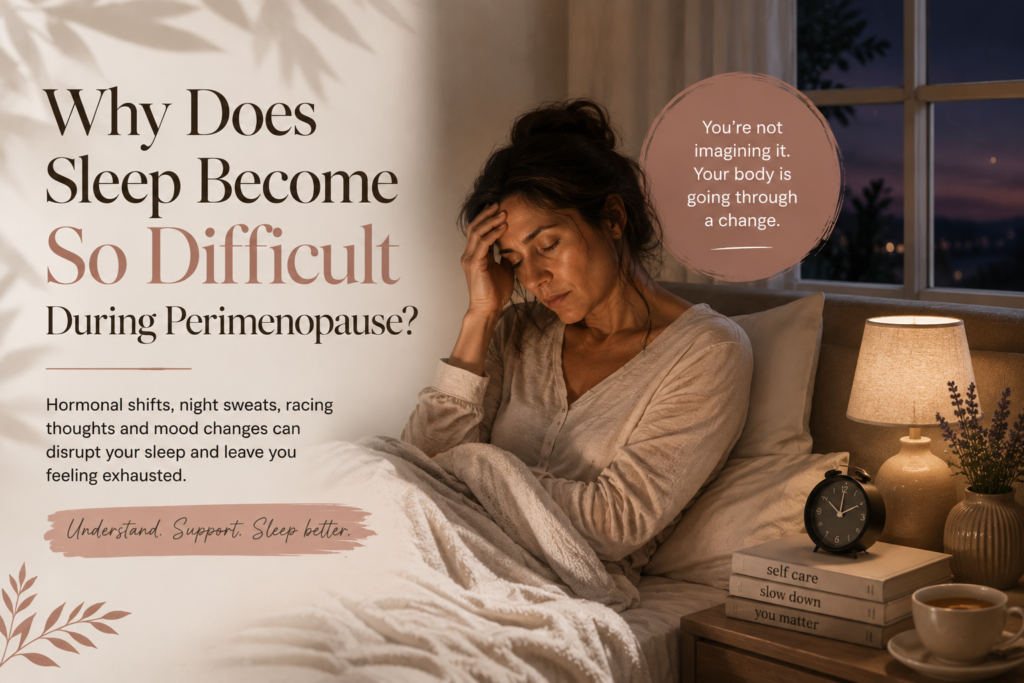

You’re exhausted.
You’ve been looking forward to bed all day. You finally get comfortable, close your eyes and think, Tonight, I’m definitely sleeping.
Then you wake up at 2:47 a.m.
You turn over.
Check the clock.
Try to fall asleep again.
And suddenly, it feels like morning is arriving before you’ve had a proper night’s rest.
For many women, sleep changes can become one of the most frustrating parts of perimenopause. The strange thing is that nobody always connects the two straight away.
You might blame stress. Your mattress. Too much coffee. Your phone.
Sometimes, those things do play a role. But hormonal changes can also be part of the bigger picture.
Your Hormones Are Changing
Perimenopause is the stage leading up to menopause, and hormone levels don’t simply decline in a smooth, predictable line.
They can fluctuate.
That can affect different parts of your body and may contribute to changes in sleep, mood and temperature regulation.
Some nights, you might sleep perfectly well.
Other nights? Not so much.
That unpredictability can be frustrating because you start wondering what you did differently.
Sometimes, there isn’t an obvious answer.
Night Sweats Can Ruin a Good Night
You fall asleep feeling comfortable.
Then suddenly, you’re too warm.
You kick off the blanket. Open the window. Turn on the fan.
And just when you finally cool down, you’re fully awake.
Hot flashes and night sweats are among the better-known symptoms associated with this stage, and they can obviously make uninterrupted sleep difficult.
Even if you manage to fall back asleep, waking up repeatedly can leave you feeling like you barely rested.
A cooler bedroom, breathable bedding and lighter sleepwear may help make the night more comfortable for some women.
Your Brain Doesn’t Always Switch Off
There’s another version of poor sleep that doesn’t involve waking up hot.
You’re lying in bed, completely tired, but your brain suddenly decides it’s the perfect time to think about everything.
Work.
Family.
Something you said three years ago.
That email you forgot to answer.
The list never seems to end.
Stress and anxiety can affect sleep at any stage of life, but mood changes during perimenopause may make the whole experience feel even more difficult.
And poor sleep can create its own cycle.
You sleep badly.
The next day, you’re tired and irritated.
Then bedtime comes around, and you’re worried about whether you’ll sleep at all.
Your Usual Routine May Stop Working
Maybe you’ve always been someone who could drink coffee at 5 p.m. and still fall asleep.
Suddenly, that doesn’t seem to work anymore.
Or perhaps you used to sleep for eight hours without waking up, but now even small noises seem to wake you.
Perimenopause can be a reminder that routines sometimes need to change.
That doesn’t mean building a complicated evening schedule with twelve different steps.
Start with the obvious things.
Try to keep a regular bedtime.
Avoid caffeine too late if you notice it affects you.
Make your bedroom as comfortable as possible.
And give yourself some time to wind down before expecting your brain to switch off instantly.
What About Perimenopause Gummies?
When sleep becomes difficult, it’s understandable to look for something that might help.
You may come across perimenopause gummies while searching for products designed for women experiencing changes during this stage.
A gummy may feel like an easy addition to your routine, but it’s still important to read the label carefully.
Check the ingredients.
Look at the serving size.
And see whether you’re already taking similar nutrients or ingredients in other supplements.
The format may be convenient, but convenience doesn’t mean every product is right for every person.
Melatonin Isn’t the Only Thing People Talk About
A quick search for sleep support will bring up countless products.
Melatonin.
Magnesium.
Herbal ingredients.
Different combinations in capsules, teas and gummies.
You may also see menopause gummies marketed for women dealing with symptoms during this stage of life.
Before trying anything new, think about what you’re hoping to address. Trouble falling asleep is different from waking repeatedly because of night sweats.
If you take medication or have an existing health condition, it’s a good idea to speak with a healthcare professional or pharmacist before starting a supplement.
Don’t Ignore What Happens During the Day
Sleep doesn’t start the moment your head hits the pillow.
What happens during the day can matter too.
If you’re constantly stressed, skipping meals, drinking caffeine late and spending every evening in front of a screen, bedtime may not feel particularly relaxing.
You don’t need to suddenly become a wellness expert.
Small changes are enough to start with.
Go for a walk.
Get some daylight.
Move your body in a way you enjoy.
Take a break from screens before bed when possible.
The goal isn’t perfection.
It’s simply giving yourself a better chance to rest.
Should You Be Worried?
The occasional bad night is normal.
But if sleep problems are happening regularly and affecting your work, mood or daily life, don’t feel like you simply have to put up with it.
Keeping track of your symptoms can sometimes help you notice patterns.
You may also see a women health gummy promoted as an easy way to support a daily wellness routine. If you choose to use a supplement, make sure you understand what it contains and avoid relying on it as the only answer to ongoing symptoms.
Persistent sleep problems deserve attention, especially when they’re starting to affect your quality of life.
Sleep Changes Are Real, and You’re Not Imagining Them
One of the most frustrating things about perimenopause is how unexpected some changes can feel.
Nobody tells you that being tired can become its own daily struggle.
That you can be exhausted but unable to sleep.
That your bedroom can suddenly feel too warm in the middle of the night.
Or that you might wake up and wonder why your body seems to have changed the rules.
Perimenopause can affect everyone differently.
And while you may not be able to control every symptom, understanding what could be happening is often a better starting point than blaming yourself for another restless night.
Sometimes, the first step toward better sleep is simply realising that your body isn’t working against you. It’s going through a change—and it may be asking for a little more attention.