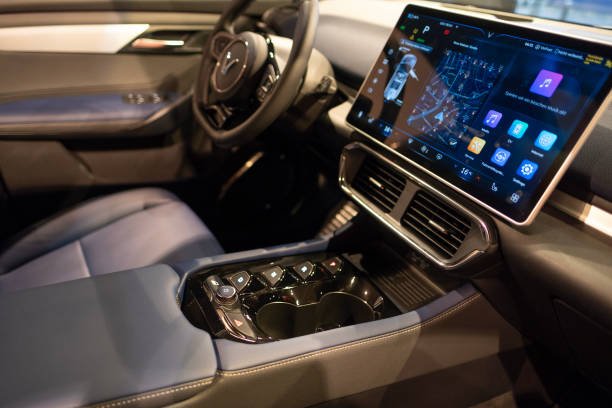

The vehicle interior is becoming an increasingly important area of automotive design, with manufacturers balancing comfort, appearance, functionality, weight, and safety. Within this environment, the headliner—the interior panel fitted beneath a vehicle’s roof—serves more purposes than simply covering the roof structure. Its materials and construction can influence cabin appearance, acoustic performance, thermal comfort, and occupant safety.
According to the supplied Vyansa Intelligence analysis, the automotive headliner sector was valued at USD 20.5 billion in 2025 and is projected to reach USD 28.09 billion by 2032, representing a 4.6% CAGR from 2026 to 2032.
Headliners Serve Multiple Interior Functions
A headliner provides a finished surface between vehicle occupants and the roof structure while helping integrate various interior elements. Depending on vehicle design, it can accommodate lighting, microphones, sensors, speakers, handles, wiring, and other components.
This makes headliner development increasingly connected with broader interior architecture. Manufacturers must consider the available space, component integration, structural requirements, appearance, and ease of assembly when designing headliner systems.
The result is a component that combines functional and aesthetic requirements within a relatively constrained area of the vehicle cabin.
Comfort Is an Important Design Consideration
Vehicle occupants interact with the interior throughout every journey, making cabin comfort an important consideration in vehicle development. Headliners can contribute to the overall perception of interior quality through their surface finish, texture, color, and fit.
Material selection can also influence acoustic and thermal characteristics within the cabin. As automakers place greater attention on the passenger experience, interior components such as headliners are increasingly considered as part of the overall comfort strategy rather than isolated trim pieces.
This can encourage suppliers to develop materials and structures that balance appearance with functional performance.
Acoustic Performance Matters in Modern Vehicles
Noise management is an important part of vehicle interior engineering. Road, tire, wind, and powertrain noise can affect the acoustic environment experienced by occupants.
Headliner materials and supporting structures can contribute to sound absorption and cabin acoustics. This consideration is particularly relevant as vehicle architectures change. Electric vehicles, for example, have quieter powertrains than many conventional vehicles, which can make other sources of cabin noise more noticeable.
As a result, acoustic treatment can become increasingly relevant to interior component design.
Thermal Comfort Influences Material Selection
The vehicle roof is exposed to changing external temperatures and solar radiation, making thermal management another consideration for interior design.
Headliner construction can incorporate materials that provide insulation between the passenger compartment and roof structure. The precise approach depends on the vehicle architecture, climate requirements, available space, and broader thermal-management strategy.
Manufacturers therefore need to balance insulation characteristics with weight, thickness, durability, appearance, and manufacturing requirements.
Lightweight Materials Support Vehicle Efficiency
Vehicle manufacturers continue to examine opportunities to reduce unnecessary weight across vehicle systems. Interior components are part of this broader lightweighting effort.
Headliner suppliers can explore lower-density materials, optimized structures, and manufacturing techniques that reduce mass while maintaining required performance.
Weight reduction can be particularly relevant for electrified vehicles, where vehicle mass can influence energy consumption and overall efficiency. However, lightweight construction must still meet durability, acoustic, thermal, appearance, and safety requirements.
Material Choices Are Becoming More Important
Automotive headliners can use a combination of substrates, foams, fibers, fabrics, adhesives, and decorative coverings. The selection depends on the vehicle application and the required combination of properties.
Manufacturers must consider factors such as surface appearance, dimensional stability, acoustic performance, weight, durability, process compatibility, and recyclability.
The growing emphasis on material efficiency is also encouraging greater attention to how interior components are manufactured and what happens to them at the end of their useful life.
Safety Requirements Influence Interior Components
Interior materials must meet applicable safety requirements because materials located within the passenger compartment can affect occupant protection and fire behavior.
The United Nations Economic Commission for Europe maintains UN Regulation No. 118, which addresses the fire resistance and burning behavior of interior materials used in certain categories of motor vehicles. UNECE lists the regulation within its official vehicle-regulation framework through UN Regulation No. 118.
The regulation is relevant to interior components because material selection and installation can influence the behavior of materials when exposed to fire.
Headliner Geometry Can Interact with Occupant Protection
The position and shape of a headliner are also connected with the vehicle’s interior geometry and occupant-protection systems.
UNECE documentation concerning vehicle safety requirements specifically references the vehicle roofline and headliner in relation to head-restraint positioning. This illustrates how headliner design can interact with other components inside the passenger compartment.
Consequently, headliner development cannot be separated completely from the wider design of seats, restraints, roof structures, and other interior systems.
Integration of Electronics Is Expanding
Modern vehicle interiors increasingly contain electronic features, and the roof area can provide a useful location for some of these systems.
Headliners may be designed around components such as cabin lighting, microphones, speakers, sensors, cameras, and connectivity-related equipment. This creates additional requirements for precise openings, attachment points, wiring routes, and structural support.
As vehicles become more connected and digitally equipped, headliner suppliers may need to account for a growing number of integrated components while preserving a clean interior appearance.
Electric Vehicles Create New Interior Considerations
The transition toward electric vehicles is influencing vehicle architecture and interior design. Electric powertrains can provide manufacturers with different packaging possibilities compared with conventional powertrains.
The resulting interior layouts can affect the design of roof systems, trim components, and integrated electronics. Electric vehicles can also have different acoustic characteristics because electric motors can produce less traditional powertrain noise than internal-combustion engines.
These changes can increase the importance of acoustic treatment and carefully engineered interior materials.
Manufacturing Efficiency Remains Important
Automotive headliners are produced within highly coordinated vehicle manufacturing processes. Suppliers must meet requirements related to dimensional accuracy, surface quality, assembly time, durability, and consistency.
Manufacturing processes can involve forming, molding, lamination, cutting, bonding, and integration of additional components.
Production efficiency is therefore important because headliners must be manufactured at consistent quality while remaining compatible with vehicle assembly operations.
Sustainability Is Influencing Interior Materials
Sustainability considerations are becoming increasingly relevant to automotive material selection. Manufacturers are evaluating material consumption, recycled content, manufacturing efficiency, recyclability, and end-of-life treatment.
For headliner suppliers, this can create interest in alternative fibers, recycled materials, lower-weight structures, and manufacturing processes that reduce waste.
However, sustainability objectives must be balanced against the functional requirements of the component. Materials still need to provide appropriate durability, appearance, safety characteristics, and performance throughout the vehicle lifecycle.
Design Differentiation Extends Beyond Appearance
Interior design remains an important part of vehicle differentiation, but headliner development increasingly involves more than visual styling.
Texture, color, lighting integration, acoustic behavior, component packaging, and material quality can all contribute to the cabin experience.
For suppliers, this creates opportunities to develop headliner systems that combine several functions within a single integrated component. Such approaches can help manufacturers manage increasingly complex interior architectures without compromising cabin aesthetics.
Regulatory Developments Continue to Matter
Automotive interior components operate within regulatory environments that address occupant protection and material safety.
UNECE maintains separate regulatory frameworks covering interior fittings and the burning behavior of interior materials. UN Regulation No. 21 addresses interior fittings, while UN Regulation No. 118 addresses fire resistance of interior materials through UN Regulation No. 21.
These frameworks demonstrate the importance of considering safety and regulatory compliance alongside design and manufacturing requirements.
Outlook Through 2032
The projected development reflects the continuing importance of vehicle interiors as automakers address comfort, acoustics, thermal performance, lightweighting, electronic integration, material efficiency, and safety.
Future headliner development is likely to remain connected with broader changes in vehicle architecture. Electrification, increasing cabin electronics, material innovation, and evolving interior-safety requirements can influence how headliners are designed and manufactured.
Overall, automotive headliners are evolving from conventional interior trim components into increasingly multifunctional systems. Their role across cabin comfort, acoustic management, thermal insulation, electronic integration, lightweighting, aesthetics, and safety makes them an important part of modern vehicle interior engineering.