
Ask a factory manager where their carbon footprint comes from and they will usually point at the boiler stack. That is a reasonable guess, and it is mostly wrong. For a typical food manufacturer, the chimney and the electricity bill together account for a small share of total emissions. Most of the footprint sits outside the factory gate: in farms, packaging mills, trucks and the kitchens where products are finally cooked.
This article walks through the three emission scopes as they apply to a food producer, shows where the tonnes usually land, and explains why Malaysian manufacturers now need to measure all three.
Key Takeaways
- Scope 3 (the value chain) makes up about 88% of a food and beverage company’s emissions on average, and can reach 99% (Sustainable Brands, citing CDP-based analysis).
- Scope 1 and 2 are small by comparison but fully under your control, so they are where most companies start.
- Malaysia’s NSRF phases in mandatory Scope 3 reporting for listed companies from FY2027 to FY2030, depending on company group.
What do Scope 1, 2 and 3 mean in a food factory?
The GHG Protocol splits a company’s green house gases into three buckets based on who controls the source.
Scope 1: direct emissions you produce on site. In food manufacturing this means fuel burned in boilers, thermal oil heaters, fryers and ovens; diesel in forklifts, generators and company-owned trucks; and refrigerant that leaks from chillers and cold rooms. Wastewater treatment can also release methane, which counts here.
Scope 2: purchased energy. This is mainly grid electricity for motors, compressors, lighting and HVAC. In Malaysia the grid still relies heavily on coal and gas, so each kilowatt-hour carries a meaningful carbon cost. Purchased steam or chilled water would also fall here.
Scope 3: everything else in the value chain. The GHG Protocol lists 15 categories. For a food maker the heavy ones are:
- Purchased goods (Category 1): agricultural raw materials such as sugar, cassava, palm oil, dairy, meat and grains, plus packaging.
- Upstream and downstream transport (Categories 4 and 9): inbound raw materials and outbound distribution you do not own.
- Use of sold products (Category 11): energy consumers spend cooking, chilling or freezing your product, where relevant.
- End-of-life (Category 12): packaging disposal and food waste in landfill.
- Business travel and employee commuting (Categories 6 and 7): small, but Bursa Malaysia already asks listed companies to report them.
Why is Scope 3 so large for food companies?
Agriculture is carbon-intensive, and food manufacturers buy a lot of it. Fertiliser production, methane from livestock and rice paddies, and land-use change all sit upstream of the factory and all land in Category 1.
The numbers are consistent across studies. An analysis of food and beverage company disclosures found Scope 3 accounted for about 88% of total emissions on average and up to 99% for some firms (Sustainable Brands). A peer-reviewed study of food and beverage processors found Scope 3 made up 81.4% of the sector’s disclosed emissions, while 35.7% of companies did not disclose Scope 3 at all (ScienceDirect, 2021). Nestlé reported that 95.8% of its 2021 footprint was Scope 3 (CarbonCloud).
The Ajinomoto Group’s own targets reflect the same split. Its SBTi-validated plan commits to cutting absolute Scope 1 and 2 emissions by 50.4% and Scope 3 by 30% by FY2030, from an FY2018 baseline (Ajinomoto Group). The lower Scope 3 target is not a lack of ambition. It shows how much harder it is to move emissions you do not directly control.
A typical footprint, by source
The exact mix depends on the product. A seasoning or ingredient producer using fermentation will look very different from a frozen-meat processor. As a rough guide:
| Source | Scope | Typical weight | Level of control |
|---|---|---|---|
| Agricultural raw materials | 3 | Largest single block | Low to medium |
| Packaging materials | 3 | Moderate | Medium |
| Outsourced logistics | 3 | Moderate | Medium |
| Boiler and process heat fuel | 1 | Largest on-site source | High |
| Refrigerant leakage | 1 | Small in tonnes, high per kg | High |
| Grid electricity | 2 | Significant in Malaysia | High |
| Waste and wastewater | 1 / 3 | Small to moderate | High |
The takeaway is that the part of the footprint you control best is also the smallest part. That is why a credible plan works on both fronts at once.
Where should a Malaysian food manufacturer start?
1. Nail Scope 1 and 2 first. You already have the data in fuel invoices, electricity bills and maintenance logs. Getting these numbers audit-ready builds the reporting muscle you will need for Scope 3.
2. Screen Scope 3 with spend-based estimates. Multiply purchase spend by category emission factors to find your hotspots. It is imprecise, but it tells you which three or four categories matter.
3. Replace estimates with supplier data where it counts. For your top raw materials, ask suppliers for product-level carbon footprints. Over time, this moves you from averages to real numbers you can actually reduce.
4. Plan around the regulatory timeline. Under Malaysia’s National Sustainability Reporting Framework, which adopts IFRS S2, Group 1 Main Market issuers (market cap of RM2 billion and above) report Scope 3 from FY2027, remaining Main Market issuers from FY2028, and ACE Market and large non-listed companies from FY2030 (Securities Commission Malaysia; Terrascope). Even unlisted suppliers will feel this, because their listed customers will ask them for data.
What a local example looks like
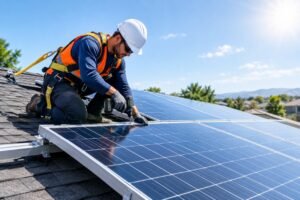
Ajinomoto (Malaysia) Berhad shows the Scope 1 and 2 playbook in practice. The company switched its heat source from fuel oil to natural gas, cutting direct combustion emissions, and installed 4.2MW of solar panels that supply about 25% of the factory’s electricity. Both moves are described on its page about mitigating greenhouse gas emissions and their effects, which also explains why the energy sector is the largest contributor to emissions worldwide.
These are the right first steps: measurable, within the company’s control and quick to show results. The harder work, which the wider Ajinomoto Group has committed to in its Scope 3 target, lies in the supply chain.
Frequently asked questions
Are refrigerant leaks really Scope 1?
Yes. Any fugitive gas released from equipment you own or operate is a direct emission. Because common HFC refrigerants have global warming potentials in the thousands, a small leak can equal many tonnes of CO2.
Is electricity from a solar PPA still Scope 2?
Yes, it is still purchased electricity. Under market-based accounting, contracted renewable power with valid certificates can be reported at a lower or zero emission factor.
Do small suppliers need to measure Scope 3?
Not by law, for now. In practice, larger customers building their own Scope 3 inventories will increasingly ask suppliers for Scope 1 and 2 data, which becomes part of the customer’s Scope 3.
The bottom line
- Scope 1 and 2 are small but controllable. Fix them first and fix them properly.
- Scope 3 is where most food-sector emissions sit, mainly in agricultural inputs and packaging.
- Malaysia’s reporting rules make Scope 3 measurement a matter of when, not if.
Next in this series: the practical engineering of cutting on-site emissions, from boilers to refrigerants to logistics.
Last Update: October 11, 2026