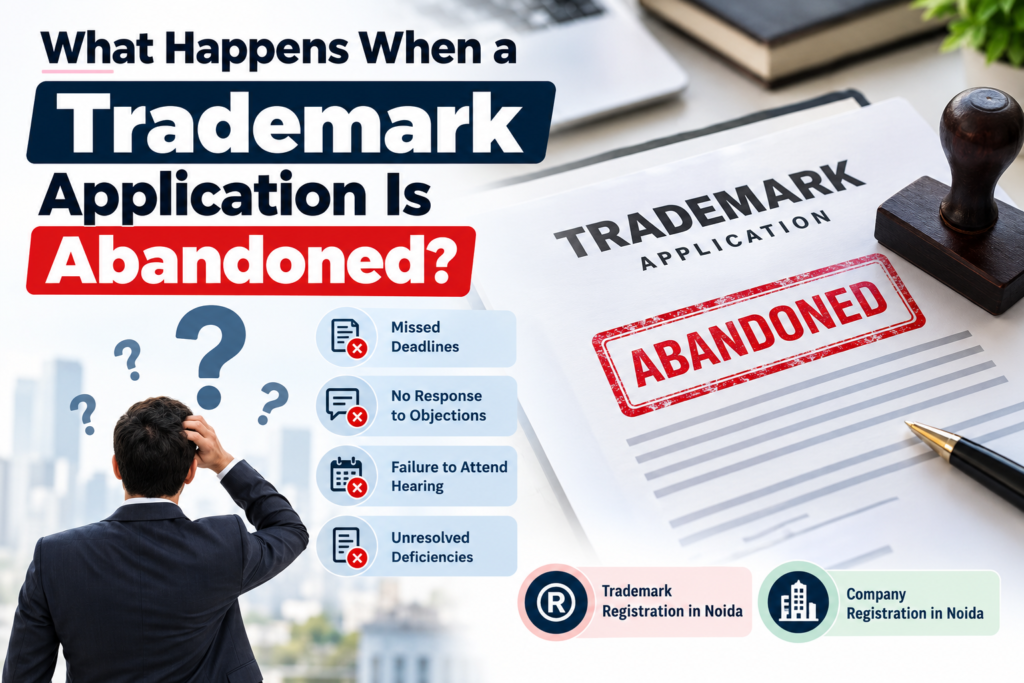

A trademark helps businesses protect their brand names, logos, and other distinctive identifiers. However, filing an application does not automatically guarantee registration. If an applicant fails to respond to an examination report, address a deficiency, or attend a required hearing, the application may be marked as abandoned by the Trade Marks Registry.
Understanding what happens when a trademark application is abandoned can help business owners take timely action and avoid unnecessary delays in protecting their brands. This guide explains the common reasons for abandonment, its consequences, and the steps applicants can consider.
What Does Abandoned Trademark Application Mean?
An abandoned trademark application is one that the Trade Marks Registry treats as no longer being actively pursued by the applicant, usually because a required procedural step was not completed within the applicable time.
In India, trademark applications are governed by the Trade Marks Act, 1999, and the Trade Marks Rules, 2017. Rule 33 of the Rules addresses situations where an applicant fails to respond to an examination report or does not attend a scheduled hearing in specified circumstances. Other procedural defaults may also lead to abandonment.
Important: An abandoned application is not the same as a registered trademark. The applicant should check the application’s current status and the reasons recorded by the Registry before deciding what to do next.
Common Reasons Why a Trademark Application Is Abandoned
Several situations can result in a trademark application being treated as abandoned.
1. Failure to Respond to an Examination Report
After examining a trademark application, the Registry may issue an examination report containing objections. If the applicant does not respond within the prescribed period, the application may be treated as abandoned under the applicable rules.
2. Missing a Scheduled Hearing
Sometimes, the Registry schedules a hearing to consider objections. If the applicant fails to attend and has not submitted a reply in the circumstances specified under the rules, the application may be abandoned.
3. Failure to Address Application Deficiencies
An application may contain incomplete information or other procedural deficiencies. Under Rule 31, failure to remedy notified deficiencies within the specified period can result in abandonment.
4. Failure to Complete Other Required Formalities
Applicants must monitor official communications and comply with the applicable requirements throughout the process. Missing a required deadline or failing to provide requested information can put the application at risk.
What Happens After a Trademark Application Is Abandoned?
1. The Registration Process May Stop
Once an application is treated as abandoned, it generally does not proceed through the normal registration process unless the status is successfully challenged or otherwise lawfully addressed.
2. Registration Is Not Granted Through That Application
The applicant should not assume that filing a trademark application provides the same rights as obtaining registration. An abandoned application does not result in a registered trademark certificate.
3. Brand Protection May Become More Complicated
If the business continues using its brand without registration, it may need to rely on whatever rights are available under applicable law, including any relevant rights arising from prior use. The legal position depends on the circumstances.
4. A Fresh Application May Be Necessary
Depending on the procedural history and available remedies, the applicant may need to consider filing a fresh application. Before doing so, it is important to check the existing application, the reason for abandonment, and whether another party has applied for or registered a similar mark.
A fresh application does not guarantee registration and may involve additional government fees and professional costs.
How to Check Your Trademark Application Status
Applicants can check their trademark status through the official Intellectual Property India website.
Follow these steps:
- Visit the official IP India website.
- Open the Trade Marks section and locate the application-status service.
- Enter the relevant application number or other requested details.
- Review the current status and available application history.
- Read the examination report, notices, or hearing details associated with the application.
- Save the relevant records for further review.
The Registry’s official trademark application workflow explains the stages an application may pass through, including examination, hearings, publication, opposition, and registration.
Can an Abandoned Trademark Application Be Restored?
There is no universal guarantee that an abandoned trademark application can be restored. The available remedy depends on why the application was abandoned, the stage of proceedings, the applicable legal provisions, and the procedural history.
If you believe the application was incorrectly marked as abandoned, review the official order or status history promptly. A trademark professional can assess whether any appropriate procedural remedy or legal challenge is available.
Do not assume that simply submitting a late reply will automatically reactivate the application.
How Can Businesses Avoid Trademark Abandonment?
Businesses can reduce the risk of abandonment by following these practices:
- Check application status regularly.
- Monitor emails and communications from the Registry.
- Respond to examination reports within the applicable period.
- Keep applicant and representative contact details updated.
- Attend scheduled hearings or take appropriate procedural steps.
- Maintain copies of applications, replies, notices, and acknowledgements.
- Seek professional guidance when objections or procedural issues arise.
These steps can help applicants manage the registration process more effectively.
Trademark Registration and Company Registration in Noida
Businesses planning to establish or expand their brands should consider both intellectual property protection and business compliance.
Trademark Registration in Noida can help eligible businesses seek registration for their brand names, logos, or other distinctive marks. The appropriate trademark class and application details depend on the goods or services offered.
Similarly, Company Registration in Noida helps entrepreneurs establish an appropriate business structure and complete the relevant registration formalities. Company registration and trademark registration are separate processes: registering a company name does not automatically provide trademark registration for that name.
TaxCaller provides business consultancy and compliance guidance to help entrepreneurs understand registration requirements and organise their documentation.
Conclusion
An abandoned trademark application can delay a business’s plans to protect its brand. Common causes include missed examination-report deadlines, unattended hearings, and unresolved procedural deficiencies. Applicants should check the official status, understand the reason for abandonment, and assess the available options before filing a fresh application or pursuing another remedy.
Whether you are exploring Trademark Registration in Noida or planning Company Registration in Noida, keeping accurate records and monitoring official communications can help you manage the process more effectively.
Official reference: IP India – Trade Marks Rules, 2017.