
A cut that is too small for urgent care but too awkward for a plain bandage sends many people to the first aid aisle. Shoppers who search for skin adhesive glue CVS usually want something that seals the edges of a small cut without a trip for stitches. The short answer is that CVS carries over the counter liquid bandages for minor cuts and scrapes. It does not appear to carry the medical grade skin adhesive that clinicians use to close wounds. The two product types look similar on a shelf or in a search result but they are made for different jobs. This guide explains what CVS sells, how liquid bandages differ from medical skin glue, which cuts suit home care and how the picture changes when the patient is a pet.
What CVS Sells for Minor Cuts
CVS lists several liquid bandage products on its website. Stock and prices change often so the product label and the store are the best sources for current availability. The products below were listed when this article was written.
CVS Health Liquid Bandage
The store brand liquid bandage comes in a small bottle. The label says it is for paper cuts, blisters, chapped and cracked fingertips, shaving nicks and hangnails, and it also lists helping to prevent calluses. The drug facts record lists benzethonium chloride and dyclonine hydrochloride as the active ingredients and shows the solvent base includes acetone, ethyl acetate, nitrocellulose and alcohol. That solvent base is typical of a film forming drugstore product and it matters later when we compare these products with medical adhesive.
CVS Health Liquid Bandage Spray
The spray version applies the same idea over a wider area. CVS describes it as a product for minor cuts, scrapes and abrasions. A spray can cover a graze that would take several small bandages but it still belongs in the minor wound category.
New Skin Products
CVS also stocks the New Skin brand in several forms. The brush version is described as a waterproof barrier for hard to reach scrapes and cuts where adhesive bandages do not stay on, with directions to clean the area and apply a small amount one to three times a day. A sensitive skin version is made without parabens, latex, BPA and fragrance. A paint on version for children is sold as a sting free waterproof skin protectant. A spray version adds an antiseptic ingredient to help prevent infection.
None of these are the clinical skin glue used to close a laceration. They are skin protectants for minor wounds. I did not find a consumer cyanoacrylate product on CVS’s listings, though other drugstore brands do sell cyanoacrylate based liquid bandages and inventory varies by store.
How Over the Counter Liquid Bandages Work
A liquid bandage is a thin coating that dries into a flexible seal. It leaves a film that is waterproof and flexible, and it bonds to the skin surface instead of sitting on top of it the way a fabric bandage does. The film covers the opening in the skin and protects it from dirt and friction while the body heals underneath.
How Long the Seal Lasts
Health references say the seal usually lasts about five to ten days and falls off on its own. The film wears away as the top layer of skin renews itself. For a minor scrape the wound underneath has usually closed by then.
Safety Notes on the Label
Most of these products carry practical warnings. The labels say they are for external use only and that they are flammable, so they must be kept away from fire and flame. CVS also advises getting medical help or calling Poison Control right away if the product is swallowed. Solvent based formulas can sting on broken skin and they should not be used near the eyes or inside the mouth or nose. Always read the product label because directions differ between brands.
Do Not Layer Products Underneath
A liquid bandage needs direct contact with clean dry skin, so it will not stick properly over an antibiotic cream or lotion. Apply any cream the label recommends only after the film has been removed or follow the instructions on the package.
Liquid Bandage vs Medical Skin Adhesive
The phrase skin glue covers two different groups of products. The difference decides what a person can buy at a drugstore and what a clinician uses in a treatment room.
What Medical Skin Adhesive Is
Medical tissue adhesive is a sterile liquid that bonds wound edges together. These adhesives are liquid cyanoacrylate monomers that harden into long solid chains on contact with blood or the wound surface, which holds the edges together. Brand names such as Dermabond are the best known examples. The manufacturer’s own materials describe the Dermabond line as intended for healthcare professionals.
How the Two Compare
One medical information site explains that clinical liquid stitches are not the same as over the counter liquid bandages. It describes them as a different substance that is somewhat stronger and applied by providers who know when to use them. A medical supplier makes a similar point, describing liquid bandages as over the counter products for small lacerations and Dermabond as a hospital grade glue that can replace stitches or staples in some cases and supplement stitches in others.
Regulation differs as well. One science education site explains that drugstore pyroxylin based products are treated as skin protectants and wound dressings, while medical grade adhesives are regulated as higher risk devices with specific safety controls. A liquid bandage is built to cover a minor wound. A clinical tissue adhesive is built to hold the edges of a prepared wound together.
Not a Do It Yourself Substitute
Household super glue is not a safe stand in. Medical formulations are designed to stay flexible and to be tolerated by living tissue. Household glues can harden into a brittle layer and may irritate the skin. A cut that looks like it needs closing should be assessed by a clinician.
Which Cuts Suit a Liquid Bandage
Liquid bandages are meant for small and shallow wounds. A cut is a reasonable candidate when it meets all of these conditions.
- The cut is shallow and the edges lie together on their own
- The wound is small and not gaping
- Bleeding has stopped or is minimal after gentle pressure
- The skin is clean and the wound is not contaminated
- The cut is not over a joint that bends constantly
- The cut is away from the eyes and mouth
Typical examples are paper cuts, shaving nicks, small scrapes and cracked fingertips. A liquid bandage is also handy where an ordinary bandage will not stay on.
Cuts That Need Professional Care
Some injuries should not be treated with a drugstore product. Health guidance says liquid bandage should generally be avoided on deep cuts, puncture wounds, burns, large abrasions, crush injuries and wounds with jagged edges. The same source adds that animal bites and serious burns also need professional evaluation.
Seek care promptly in situations like these.
- The wound is deep or the edges are wide apart
- Bleeding does not stop after steady pressure
- The edges are jagged or the cut is long
- The wound was caused by a bite or a puncture
- Dirt or debris is stuck in the wound
- The cut is on the face or over a joint
- Signs of infection appear such as spreading redness, swelling, warmth, pus or fever
A clinician may also ask about vaccination status for dirty wounds. Sealing contamination under a film can trap bacteria so a wound that is not clean should be cleaned and assessed first. Even for medical glue, one source notes that shallow cuts shorter than about two and a half centimeters are the usual candidates and that dirty cuts raise infection risk.
How to Use a Liquid Bandage Safely
Directions differ between brands so the package instructions come first. These general steps apply to most products.
- Wash your hands and rinse the cut with clean water
- Stop any bleeding with gentle pressure
- Dry the skin around the cut
- Apply a thin layer over the cut and avoid pushing the product into the wound
- Let the film dry fully before touching clothing or objects
- Keep the product away from flames and heat while it dries
- Do not apply creams or lotions over the film
A thin layer dries faster and works better than a thick one. A thick application can trap solvent underneath and slow drying. If the cut reopens or looks worse in the days that follow, stop using the product and have the wound checked.
What About Pets
Pet owners sometimes reach for a human liquid bandage when a dog or cat has a small cut. The better first step is a call to the veterinarian. Several reasons apply.
Licking and Ingestion
Dogs and cats lick wounds. A product with a solvent base, an antiseptic or a flammable warning is not meant to be swallowed. As noted above, the CVS label advises getting medical help if the product is swallowed. A pet that licks a freshly coated wound may swallow part of it. Products made for people are not labeled or tested for animals.
Hidden Problems
Small wounds on pets are often bigger than they look. Fur hides the depth and the shape of a cut. Puncture wounds from bites can close at the surface while infection builds underneath. Sealing the surface can make this worse. A veterinarian can clip the fur and clean the wound and decide how it should be closed.
Veterinary Skin Glue
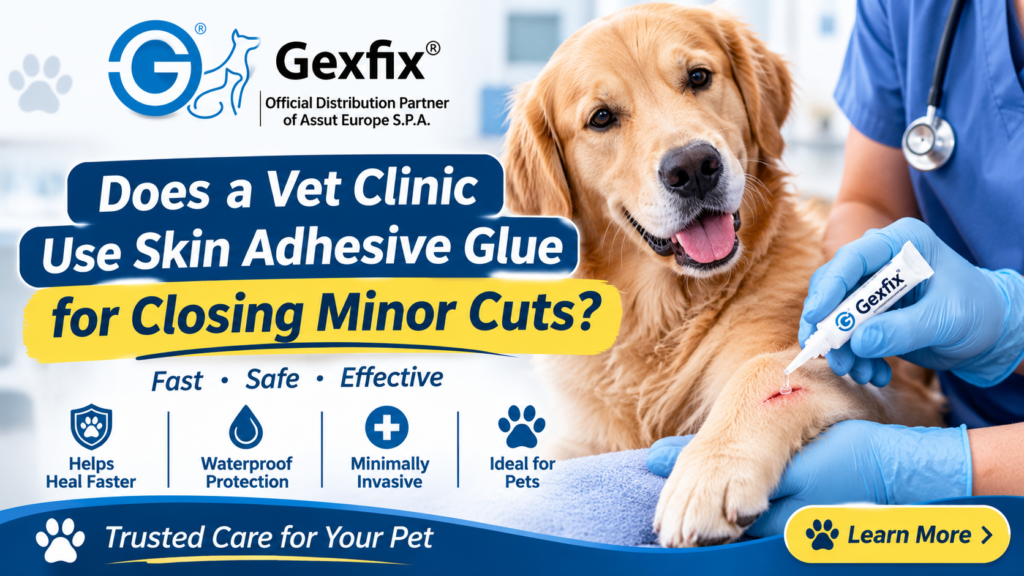
Veterinary teams use adhesives made for animal patients. The Skin Glue product from Gexfix is supplied in a box of twelve single patient applicators and is labeled for veterinary use only. Veterinarians apply it along the outside of a prepared wound that is clean and shallow and under little tension. The veterinarian chooses it only when the wound suits it and may use sutures or staples instead.
Owners should never use veterinary products on people or human products on animals without advice from the right professional. Labeling exists for a reason.
How Veterinarians Choose a Closure Method
Veterinarians weigh several options for each wound. The choice depends on the depth and length of the wound and the tension on the skin. The location on the body and the behavior of the patient also count.
Tissue adhesive suits short shallow wounds with little tension. It sets within seconds and wears away as the skin heals so no removal visit is needed. It lacks the strength for long incisions and for areas that bend constantly. Some teams add a thin layer of surgical glue over a closed incision as a surface barrier in patients that tend to lick. This supports a properly closed wound and never replaces structural closure.
A skin stapler closes long straight skin incisions quickly with even spacing. It closes the skin layer only so deeper layers still need suture. Staples are removed after healing. Sutures remain the most flexible method since the surgeon can adjust tension and use them in curved wounds and deeper layers.
Good closure depends on preparation as much as on the material. Clean and well maintained veterinary surgical instruments help the surgeon trim damaged tissue and line up the wound edges. Sterile technique lowers infection risk whichever method is chosen.
Caring for a Minor Cut Afterward
Whether a person or a pet has the cut, a few habits protect healing.
- Keep the area clean and dry unless the label or the clinician says otherwise
- Avoid picking at the film or the scab
- Protect the area from friction and dirt
- Check the cut once a day for changes
- Keep pets from licking with an Elizabethan collar if the veterinarian recommends one
- Limit rough activity until the skin has sealed
Contact a clinician if the cut becomes red, swollen, warm or painful. Discharge, a bad smell, fever or a wound that opens are also reasons to call.
Common Mistakes to Avoid
Several mistakes show up often with liquid bandages and skin glue.
- Using a liquid bandage on a deep or gaping wound
- Sealing a dirty wound before cleaning it
- Applying a thick layer that dries slowly
- Pushing the product into the wound
- Layering it over creams or ointments
- Using it near the eyes or mouth
- Using household super glue on skin
- Applying human products to pets without veterinary advice
- Ignoring signs of infection under the film
Quick Answers at a Glance
- CVS sells over the counter liquid bandages and sprays for minor cuts and scrapes
- These products cover a small wound and are not the same as medical skin adhesive
- Medical tissue adhesive is applied by trained professionals
- Deep jagged dirty or bitten wounds need professional care
- Pets should be seen by a veterinarian for anything beyond a very minor scratch
Summary
For anyone searching for skin adhesive glue CVS stores stock liquid bandages that protect minor cuts, scrapes and cracked skin. Medical skin adhesive is a different product that clinicians and veterinary teams apply to prepared wounds. The right choice depends on how deep and clean the wound is and how much tension it faces. Small shallow cuts on people may do well with a drugstore liquid bandage used as directed. Larger or dirtier wounds need professional assessment and so do most wounds on pets. When in doubt a quick call to a clinician or a veterinarian is the safest next step.
Gexfix International Corp. supplies veterinary skin adhesive, disposable skin staplers and absorbable and non absorbable veterinary sutures in partnership with Assut Europe S.P.A.
FAQs
Q: Does CVS sell skin glue for minor cuts?
A: CVS lists liquid bandages and sprays for minor cuts, scrapes and abrasions. These are over the counter skin protectants. The medical skin adhesive used by clinicians is a different product, and availability varies by store.
Q: Is liquid bandage the same as medical skin glue?
A: No. Clinical liquid stitches are described as a different and somewhat stronger substance that providers apply. Drugstore liquid bandages are meant to cover minor wounds at home.
Q: How long does a liquid bandage stay on?
A: The seal usually lasts about five to ten days and then falls off naturally. Follow the package directions and avoid picking at the film so the skin underneath can finish healing.
Q: When should a cut see a clinician instead of a liquid bandage?
A: Deep cuts, puncture wounds, burns and wounds with jagged edges are generally not suited to liquid bandage. Bites, wounds that keep bleeding and signs of infection also need professional care.
Q: Can I use a human liquid bandage on my dog or cat?
A: Ask your veterinarian first. Human products are not labeled for animals and pets may lick and swallow them. Small wounds on pets can also hide bites or deeper damage that needs a proper veterinary exam.