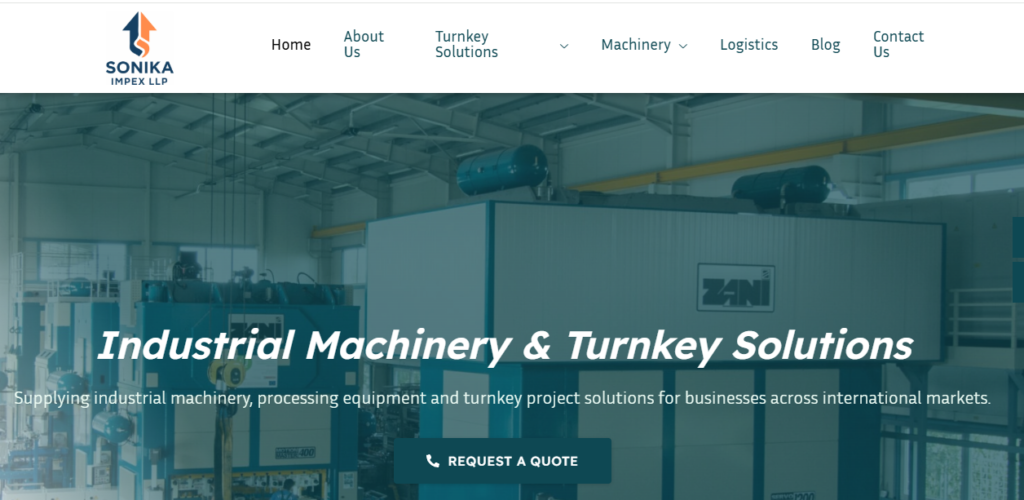

Selecting the right industrial equipment supplier solution is a significant decision for a business planning a new facility, expanding production or replacing existing equipment. Machinery should never be chosen by name alone. The correct configuration depends on product specification, target output, operating conditions, material characteristics and existing infrastructure. Sonika Impex works across industrial machinery, processing equipment and project-based engineering requirements. A well-prepared project brief helps a buyer compare equipment on relevant technical and operational criteria instead of relying only on broad catalogue descriptions.
Define the application and production target
Before requesting a quotation, define the product, input material, output specification, required production rate and expected operating hours. In industrial manufacturing and processing, these details influence the process sequence, machine size, material handling arrangement and utilities. The buyer should also identify seasonal changes in raw material supply, variations in product characteristics and the quality parameters expected by customers. These inputs help determine whether a standalone machine, a connected production line or a complete plant arrangement is the most practical route. Explore the mapped service: Industrial Equipment Supplier.
Map the complete process flow
A typical process may include receiving, preparation, core processing, material transfer, quality checks and finished-goods handling. The exact arrangement varies with the raw material and finished product. Every stage should have a defined input, output, capacity and transfer method. If a machine is selected without checking the equipment before and after it, the line may develop a bottleneck. A process-flow diagram can reveal where buffer storage, inspection points, conveyors, elevators, operator stations and maintenance access are needed. It also helps the project team identify the boundary between machinery supply and civil or utility work.
Choose machinery using technical criteria
Depending on the application, an equipment package may include application-specific machinery, process equipment, material handling systems, utilities and controls. Buyers should request technical information such as rated capacity, working range, material of construction, power consumption, control arrangement, cleaning access, wear parts and recommended operating conditions. Rated output is not always the same as actual plant throughput. Feed quality, moisture, product behaviour, operator skill and upstream or downstream restrictions can affect performance. It is therefore important to compare machines under realistic operating assumptions.
Plan the factory layout and utilities
Plant layout and utilities deserve attention before an order is finalised. Review floor space, floor loading, access for unloading, electrical supply, water, compressed air, steam, cooling and ventilation wherever these are required by the process. The layout should allow safe movement of raw materials and finished goods, while leaving room for inspection, cleaning and replacement of components. For a new facility, civil work should follow the approved equipment arrangement. For an expansion, confirm that existing services and machines can support the additional load.
Prepare for quality, maintenance and operation
Production reliability also depends on operating readiness. Establish routine inspection, preventive maintenance, operator training, spare-parts planning and records for important process parameters. Food-processing projects need particular attention to hygienic design, cleaning and product-contact surfaces. Pharmaceutical and other regulated applications must follow the customer’s applicable quality system and regulatory requirements. The buyer should confirm which documentation, testing, installation, commissioning and training activities are included in the written project scope.
Evaluate the supplier and project scope
A capable machinery supplier should understand the application, ask for missing technical information and explain the assumptions behind its proposal. Sonika Impex describes its capabilities across machinery supply, processing solutions, project planning, export coordination and support for installation and commissioning where included in the agreed scope. When evaluating industrial equipment supplier, buyers should discuss the full requirement: product, capacity, process stages, site location, utilities, delivery terms, inspection expectations and the technical assistance required after dispatch.
Prepare a clear machinery enquiry
Before asking for a proposal, prepare a project brief containing the product or raw material, target hourly or daily output, operating shifts, finished-product specification, packaging format, site location and available utilities. Add drawings or photographs if the project involves an existing facility. State clearly whether the requirement is for one machine, replacement equipment, a new line or a turnkey project. This makes it easier to identify technical gaps and reduces the risk of comparing quotations that are based on different assumptions.
Capacity and supply planning
Capacity should be discussed in the same unit throughout the proposal. Clarify whether a stated rate refers to raw-material input, intermediate product or finished output. Ask whether the rate assumes continuous feeding and stable raw-material quality. Where production is seasonal, consider the peak intake requirement as well as average annual demand. These distinctions make machinery comparisons more meaningful and help the buyer plan storage, labour and dispatch.
Frequently Asked Questions
What information should be shared with a machinery supplier?
Share the product, input material, target capacity, operating hours, output specification, site location, utilities and whether you need one machine or a complete line.
Should a business buy a single machine or a complete plant?
The decision depends on the existing facility and process flow. A single machine may suit a replacement or expansion, while a new operation may require several integrated stages.
Why should commissioning and training be discussed in advance?
They clarify how equipment will be installed, tested and handed over. Confirm activities, responsibilities and documentation in the written project scope.
For company background and wider industrial capabilities, visit Sonika Impex
Editorial note: verify final machinery specifications, product availability, regulatory requirements and exact supply scope with the company before publication.
Conclusion
The best industrial equipment supplier solution is the one that fits the process, production target and operating environment—not simply the one with the longest equipment list. A structured assessment of raw materials, process stages, capacity, utilities, quality expectations and future expansion creates a sound basis for investment. Businesses working in industrial manufacturing and processing can review the relevant capabilities of Sonika Impex and share a clear technical brief to discuss a suitable configuration. Final specifications, availability, performance and project scope should be confirmed in the supplier’s written proposal.