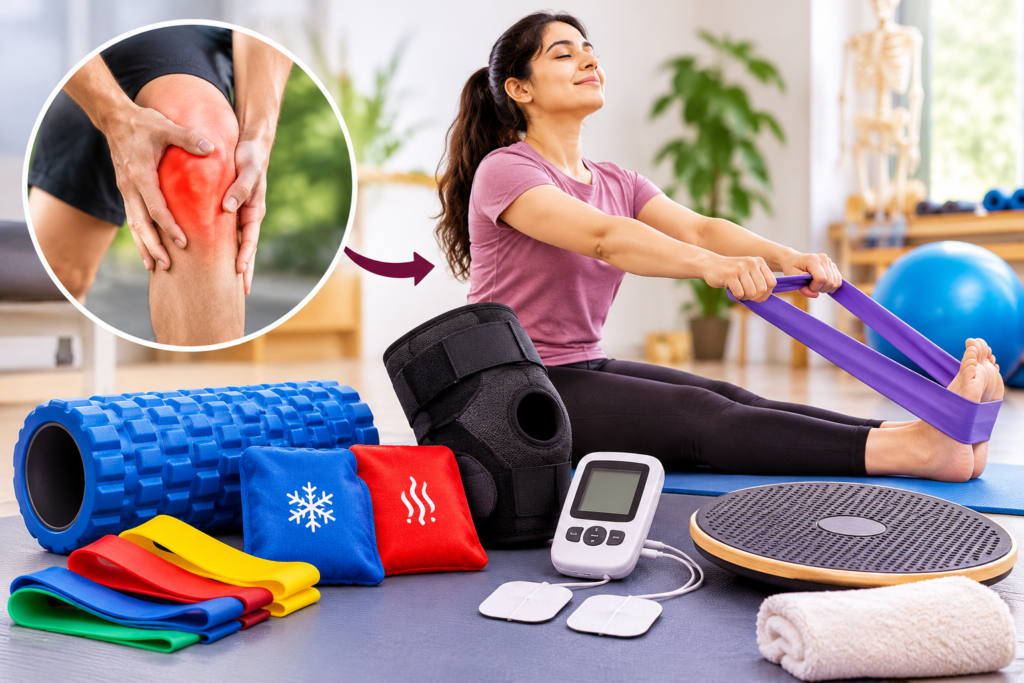

Recovering from an injury requires patience, proper care, and the right rehabilitation approach. Whether someone is dealing with a sports injury, muscle strain, joint pain, or recovering after surgery, physiotherapy can play an important role in restoring movement and improving physical function. Along with professional guidance, appropriate physiotherapy equipment can help patients perform rehabilitation exercises safely and consistently.
Today, many rehabilitation tools are also available for home use, making it easier to follow prescribed exercise routines outside clinical settings. However, choosing the right equipment depends on the type of injury, recovery stage, and recommendations of a qualified physiotherapist.
1. Resistance Bands for Strength Training
Resistance bands are among the most versatile tools used in physical therapy and rehabilitation. These flexible bands provide adjustable resistance, allowing individuals to perform controlled strengthening exercises without relying on heavy weights.
They are commonly used during rehabilitation for shoulder injuries, knee problems, and muscle weakness. Resistance band exercises can help improve muscle strength, joint stability, and flexibility when performed correctly.
Key benefits include:
- Supporting gradual muscle strengthening.
- Improving joint stability and movement control.
- Providing adjustable resistance for different fitness levels.
- Supporting rehabilitation exercises at home.
2. Foam Rollers for Muscle Recovery
Foam rollers are popular physiotherapy and fitness accessories used for self-myofascial release. They apply pressure to selected muscle areas and may help temporarily reduce muscle tightness and improve perceived flexibility.
They are commonly used by athletes and individuals experiencing muscle stiffness after physical activity. Foam rolling can also be incorporated into warm-up and recovery routines.
Key benefits include:
- Helping relieve perceived muscle tightness.
- Supporting flexibility and mobility exercises.
- Encouraging muscle relaxation after exercise.
- Supporting post-workout recovery routines.
Beginners should start with gentle pressure and avoid rolling directly over injured areas, bones, or painful joints. Foam rollers are available in different designs, including smooth and textured options.
3. Hot and Cold Packs for Pain Management
Hot and cold therapy products are widely used in physiotherapy settings to manage certain types of discomfort. However, heat and cold serve different purposes, so understanding when to use each is important.
Cold packs may help reduce pain and swelling following certain acute injuries. Heat packs, on the other hand, may help relax tight muscles and improve comfort in some cases of muscle stiffness.
4. Knee Braces and Joint Supports
Knee braces and joint supports are commonly used in sports medicine and rehabilitation. They provide external support to selected joints and may help improve comfort and stability during certain activities.
Depending on their design, knee supports can provide compression, patellar support, or additional mechanical stability. They may be recommended for individuals recovering from sprains, ligament injuries, or certain knee conditions.
Key benefits include:
- Providing external support to the knee joint.
- Helping improve comfort during movement.
- Supporting selected rehabilitation activities.
- Offering additional stability when clinically appropriate.
5. TENS and EMS Machines for Electrotherapy
Transcutaneous Electrical Nerve Stimulation (TENS) and Electrical Muscle Stimulation (EMS) devices are examples of electrotherapy equipment used in rehabilitation settings.
TENS devices deliver electrical stimulation through electrodes placed on the skin and may help manage certain types of pain. EMS devices stimulate muscles and may be used for selected muscle activation and rehabilitation purposes.
Key benefits include:
- TENS may provide temporary relief from certain types of pain.
- EMS can support selected muscle activation exercises.
- They offer additional options within supervised rehabilitation programs.
- Some devices combine TENS and EMS functions.
These devices are not suitable for everyone. People with implanted electronic devices, certain medical conditions, or other contraindications should consult a healthcare professional before use. Correct electrode placement and device settings are also essential.
6. Shoulder Pulley Systems for Mobility Exercises
Shoulder pulley systems are useful rehabilitation accessories designed to support controlled shoulder movement. They typically consist of a pulley, rope, and handles that allow individuals to perform guided range-of-motion exercises.
Key benefits include:
- Supporting gentle shoulder mobility exercises.
- Helping maintain or improve range of motion.
Patients should perform shoulder pulley exercises within their comfortable range and follow the instructions provided by their physiotherapist. Excessive stretching or forcing movement can aggravate an existing injury.
7. Balance Boards for Coordination and Stability
Balance boards are rehabilitation and fitness tools used to challenge postural control, coordination, and stability. They feature an unstable surface that requires individuals to make controlled adjustments while maintaining their balance.
These tools may be incorporated into rehabilitation programs for selected ankle injuries, lower-limb conditions, and sports-related recovery.
Key benefits include:
- Supporting balance and coordination training.
- Challenging stabilising muscles.
- Improving movement control.
- Supporting progressive functional rehabilitation.
How to Choose the Right Physiotherapy Equipment
Selecting appropriate rehabilitation equipment requires more than comparing prices or product features. The right choice depends on the patient’s injury, physical condition, treatment goals, and recovery stage.
Consider these factors before purchasing:
- Professional recommendation: Consult a qualified physiotherapist before selecting equipment.
- Product quality: Look for durable materials and reliable construction.
- Ease of use: Choose equipment that matches the patient’s abilities.
- Safety: Check product instructions, weight limits, and usage precautions.
- Rehabilitation goals: Select tools that support the exercises included in the treatment plan.
Frequently Asked Questions (FAQs)
1. What are the most commonly used physiotherapy tools?
Common physiotherapy tools include resistance bands, foam rollers, hot and cold packs, knee braces, TENS machines, shoulder pulley systems, and balance boards.
2. Can physiotherapy equipment be used at home?
Yes. Many rehabilitation products are suitable for home use when recommended by a qualified physiotherapist. Patients should follow proper instructions and avoid exercises that cause increased pain.
3. Which equipment is best for muscle strengthening?
Resistance bands are commonly used for muscle-strengthening exercises because they provide adjustable resistance and support different levels of physical ability.
4. Are foam rollers useful for injury recovery?
Foam rollers may help reduce perceived muscle tightness and improve flexibility. However, they should not be applied directly to acute injuries or painful areas without professional guidance.
5. Where can I buy physiotherapy equipment in Pakistan?
You can explore physiotherapy and rehabilitation products through Physio Shop Pakistan, which offers various rehabilitation tools, exercise accessories, braces, and electrotherapy products.
Final Thoughts
The right physiotherapy tools can make rehabilitation more manageable by supporting muscle strengthening, improving mobility, and helping individuals perform prescribed exercises safely. From resistance bands and foam rollers to knee supports and TENS machines, each tool serves a different purpose in the recovery process.
However, successful injury recovery depends on proper assessment, professional guidance, and consistent rehabilitation rather than equipment alone. Choosing quality physiotherapy products and using them correctly can help individuals work towards better movement, strength, and physical function. For suitable rehabilitation and exercise equipment, Physio Shop Pakistan offers a range of products to support different physiotherapy needs.