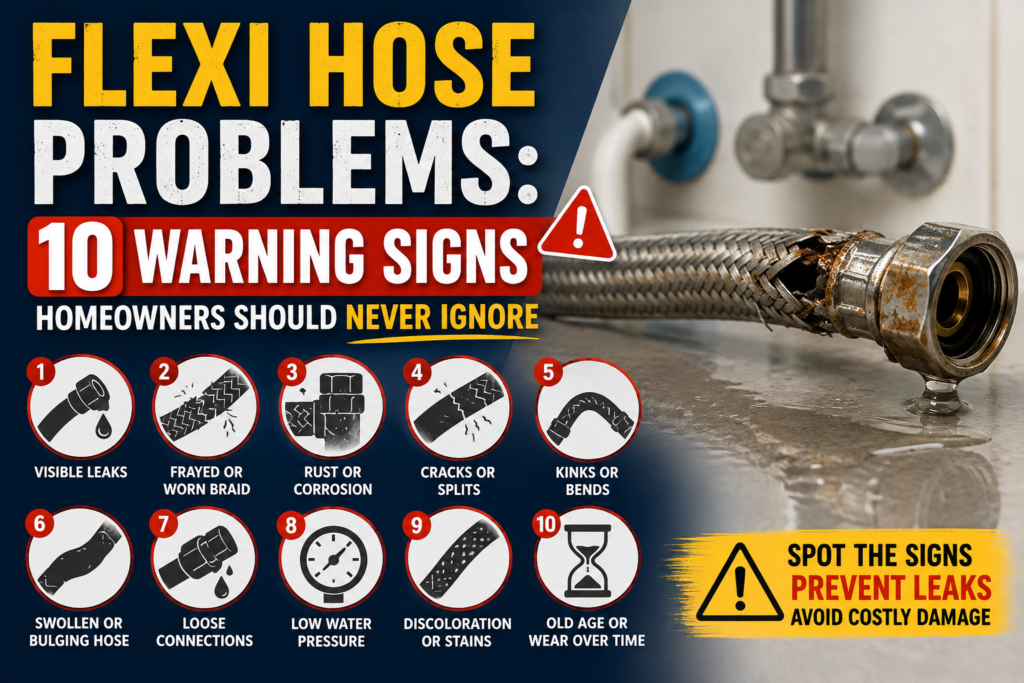

Flexi hoses (also called braided or flexible connector hoses) are the small, unassuming lines that connect your washing machine, dishwasher, water heater, and toilet to the main water supply. They’re cheap, easy to install, and — when they fail — capable of dumping hundreds of liters of water into your home in minutes. Most flexi hose failures don’t happen out of nowhere. They give warning signs first. Knowing what to look for can be the difference between a five-minute fix and a five-figure insurance claim.
Below are the 10 warning signs every homeowner should know, why they matter, and what to do about them.
1. Visible Rust or Corrosion on the Fittings
The metal nuts and fittings at either end of a flexi hose are usually plated brass or steel. Once that plating wears through, rust sets in. Rust weakens the fitting’s grip on the threads, and a corroded connection is far more likely to loosen or crack under normal water pressure. If you spot orange or brown discoloration around a connection point, treat it as an early alarm, not a cosmetic issue.
2. Bulging or Swelling in the Braided Section
A healthy flexi hose should look uniform along its length. If you notice a section that looks swollen, lumpy, or larger in diameter than the rest of the hose, the inner rubber or PVC liner is likely failing while the outer braid tries to hold pressure back. A bulge is one of the clearest signs that a hose is close to bursting.
3. Cracks or Splits in the Outer Braiding
Stainless steel braiding is meant to reinforce the hose, but constant flexing, heat exposure, or age can cause individual strands to fray or snap. A few broken strands might seem minor, but they concentrate stress on the remaining wires, accelerating failure. Run your fingers gently along the hose (with the water off) to feel for rough or sharp spots.
4. Damp Patches, Drips, or Water Stains Nearby
Slow leaks rarely announce themselves loudly. Instead, you’ll notice a faint water stain on the cabinet floor under the sink, a musty smell near the washing machine, or a damp patch on the wall behind a toilet. These small clues often mean a hose or fitting is weeping under pressure — and weeping today can mean bursting tomorrow.
5. Reduced Water Flow or Pressure
If water pressure to a specific fixture has dropped noticeably, mineral buildup or a partially collapsed inner liner inside the flexi hose could be to blame. A degraded liner restricts flow and is also more prone to sudden rupture because the internal structure is compromised.
6. Unusual Noises When Water Is Running
A hissing, whistling, or rattling sound coming from behind an appliance or under a sink often points to a loose fitting or a hose vibrating against pipework due to internal damage. Noise alone isn’t proof of failure, but paired with any other sign on this list, it’s worth investigating immediately.
7. Visible Age — Especially Past 8-10 Years
Most manufacturers and plumbers recommend replacing flexi hoses every 8 to 10 years, even if they look fine. Rubber and PVC liners degrade from the inside out, and that deterioration isn’t always visible from the outside. If you don’t know how old your hoses are, check the installation date on receipts or ask the previous homeowner — and when in doubt, replace them proactively.
8. Hose Feels Hard, Brittle, or Overly Stiff
A flexible hose should still have some give. If it feels rigid, brittle, or cracks slightly when bent, the internal materials have likely hardened with age or heat exposure. Brittle hoses lose their ability to absorb pressure fluctuations, which makes sudden bursts more likely, especially during temperature swings.
9. Discoloration or Residue Around the Hose
White, green, or blue crusty residue near a fitting usually indicates mineral deposits from a slow, ongoing leak that has already evaporated multiple times. This is a strong sign that a connection has been failing quietly for weeks or months, even if you haven’t noticed active dripping.
10. The Hose Was Installed Behind a Fixed Cabinet or Hard-to-Reach Area
This isn’t a defect in the hose itself, but it’s a risk factor worth flagging. Hoses tucked behind built-in cabinetry, under fitted kitchen units, or behind a washing machine that’s rarely moved often go years without inspection. If you can’t remember the last time you actually looked at a hose, that itself is a warning sign.
Why These Signs Matter
Flexi hose failures are one of the most common causes of major water damage claims in residential homes, largely because they fail suddenly and often while no one is home. A single burst hose behind a washing machine can release water continuously until someone notices or the supply is manually shut off — sometimes for hours. Catching the early signs above turns a potential emergency into a routine, low-cost repair.
What To Do If You Spot a Warning Sign
- Turn off the water supply to that fixture immediately if you see active dripping, bulging, or corrosion.
- Don’t attempt to reuse a stressed hose — even if it “looks fine” after tightening a fitting, the underlying material damage doesn’t reverse.
- Replace in pairs — if one hose (like on a washing machine) shows wear, its twin was installed at the same time and is likely just as worn.
- Choose quality replacements — braided stainless steel with a reinforced inner core generally outlasts basic rubber hoses.
- Set a reminder to visually inspect all flexi hoses every 6 to 12 months, especially before long trips away from home.
For a deeper walkthrough of early failure indicators and how professionals assess flexi hose condition during inspections, this detailed breakdown of flexi hose failure warning signs is a useful next read.
Final Thoughts
Flexi hoses are small components with an outsized ability to cause damage when ignored. The good news is that failure is rarely instant — there’s almost always a window of warning signs beforehand. A few minutes spent checking under sinks, behind appliances, and near your water heater every few months can spare you from one of the most preventable — and most expensive — plumbing emergencies a home can face.