
Corrugated packaging has become an important part of modern supply chains, supporting the movement, storage, and protection of products across industries. Corrugated boxes and related packaging formats are widely used because they combine structural strength, relatively low weight, printability, and practical handling characteristics. Behind this packaging ecosystem, corrugators play an important role in converting paperboard materials into functional corrugated structures.
According to the supplied Vyansa Intelligence analysis, the corrugators sector was valued at USD 4.22 billion in 2025 and is projected to reach USD 8.19 billion by 2032, representing a 9.94% CAGR from 2026 to 2032.
Packaging Demand Supports Corrugator Applications
Corrugated packaging is used across manufacturing, retail, food and beverage, consumer goods, logistics, and e-commerce. Packaging needs to protect products during transportation while remaining practical for storage and handling.
The U.S. EPA identifies packaging as material used to wrap or protect products during shipping, storage, and distribution. It also identifies corrugated boxes as one of the most frequently recycled packaging products.
This broad application base creates an ongoing requirement for equipment capable of producing corrugated packaging efficiently and consistently.
Corrugators Are Central to Box Manufacturing
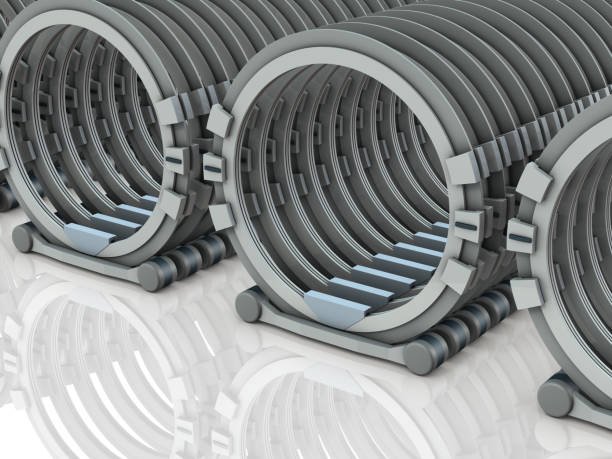
A corrugator converts paperboard into corrugated board by combining linerboard with a fluted medium. The resulting structure provides rigidity and cushioning while maintaining a relatively efficient material profile.
Manufacturing systems can incorporate multiple stages, including fluting, adhesive application, liner bonding, cutting, scoring, and sheet handling. The performance of each stage can influence the consistency and quality of the finished board.
As packaging producers face increasingly diverse product requirements, equipment flexibility and process control become important considerations.
E-Commerce Creates New Packaging Requirements
The continued development of online retail has increased the importance of packaging that can withstand multiple stages of handling. Products may pass through warehouses, fulfillment facilities, transportation networks, and last-mile delivery before reaching consumers.
This environment places greater emphasis on box strength, dimensional accuracy, efficient material use, and customized packaging formats.
Corrugators equipped to support different board grades, dimensions, and production specifications can help packaging manufacturers respond to these requirements.
Automation Improves Production Efficiency
Automation is becoming increasingly relevant to corrugated packaging manufacturing. Modern production lines can integrate automated controls, monitoring systems, material handling, and quality-management technologies.
Automation can help manufacturers maintain consistent production parameters while reducing manual intervention in repetitive processes.
Digital controls can also provide greater visibility into production performance, allowing operators to identify process variations and address issues more efficiently.
Flexible Equipment Supports Diverse Packaging Needs
Packaging producers serve customers with different requirements for box dimensions, board strength, printing, and structural design. Corrugator equipment therefore needs to support a wide range of production conditions.
Flexible machinery can allow manufacturers to switch between different specifications while maintaining production efficiency. This is particularly useful for packaging producers serving multiple industries and customer segments.
Equipment manufacturers can differentiate their solutions through production speed, automation capabilities, energy efficiency, material compatibility, and process flexibility.
Material Efficiency Is Becoming More Important
Packaging manufacturers are under increasing pressure to use materials efficiently without compromising product protection. Lightweighting can reduce material consumption and transportation requirements when appropriate board strength is maintained.
The EPA’s packaging guidance highlights lightweight and efficient packaging construction as an approach that can reduce waste while supporting economic efficiency.
For corrugator manufacturers, this creates opportunities to develop machinery capable of producing thinner or optimized board structures while maintaining consistent quality.
Recycling Strengthens Corrugated Packaging’s Position
Corrugated packaging has a well-established role in recycling systems. The EPA reports that corrugated boxes represented the largest single product category within paper and paperboard packaging in its 2018 data, with a high recycling rate for corrugated boxes.
The agency also recognizes corrugated containers as a material suitable for recycling and includes them in its standardized terminology for paper, fiber, and paperboard materials accepted by recycling programs.
This recycling potential supports continued interest in paper-based packaging and, consequently, in the equipment used to manufacture corrugated products.
Digitalization Supports Better Process Control
Digital technologies can improve production monitoring, maintenance planning, and quality management across corrugator operations.
Sensors and connected systems can help manufacturers monitor operating conditions and identify deviations during production. Data-driven maintenance can also help equipment operators identify potential issues before they result in significant downtime.
For large packaging facilities, improving equipment availability can be particularly important because interruptions can affect downstream converting and order fulfillment.
Energy Efficiency Becomes an Equipment Consideration
Energy consumption is another consideration for packaging manufacturers. Corrugator systems involve multiple mechanical and thermal processes, making equipment efficiency relevant to operating costs and sustainability objectives.
Manufacturers can explore more efficient motors, improved heating systems, optimized production controls, and automated shutdown or standby functions.
Reducing unnecessary energy consumption can complement broader efforts to improve manufacturing efficiency without changing the basic functionality of corrugated packaging.
Innovation Is Expanding Corrugator Capabilities
Innovation in corrugator technology is increasingly focused on automation, precision, flexibility, material efficiency, and production visibility.
Equipment capable of handling changing order requirements can help packaging producers serve customers seeking customized box dimensions and shorter production runs. Improved control systems can also support more consistent board quality.
As packaging requirements become more specialized, machinery manufacturers have opportunities to develop systems that combine high productivity with greater operational flexibility.
Outlook Through 2032
The sector’s development will remain connected to demand for corrugated packaging, e-commerce distribution, manufacturing automation, material efficiency, recycling, energy management, and customized packaging requirements.
Future opportunities are likely to center on equipment that helps packaging producers improve productivity while maintaining consistent board quality and efficient resource use.
Overall, corrugated packaging demand, e-commerce, automation, production flexibility, material efficiency, recycling, digital process control, and energy-conscious manufacturing will remain important factors shaping the corrugators sector through 2032.