
Quick Summary
Laugh lines, also called nasolabial folds, develop through a combination of natural skin aging, collagen loss, facial fat redistribution, and changes in underlying tissue support. Facial fat compartments play an important role in how these lines become more noticeable over time. Understanding these changes helps aesthetic providers determine whether dermal fillers may improve facial balance and restore lost volume without creating an unnatural appearance.
Understanding Dermal Fillers for Laugh Lines in Pembroke Pines
Laugh lines are the creases that extend from the sides of the nose toward the corners of the mouth. They are a normal part of facial expression, but their appearance can become more pronounced with age. While repeated smiling contributes to their development, the underlying causes involve much more than facial movement.
One important factor is the gradual transformation of facial fat compartments. These specialized pockets of fat provide structure, cushioning, and natural fullness to different areas of the face. As they change in volume and position, the surrounding skin may lose support, making smile lines appear deeper.
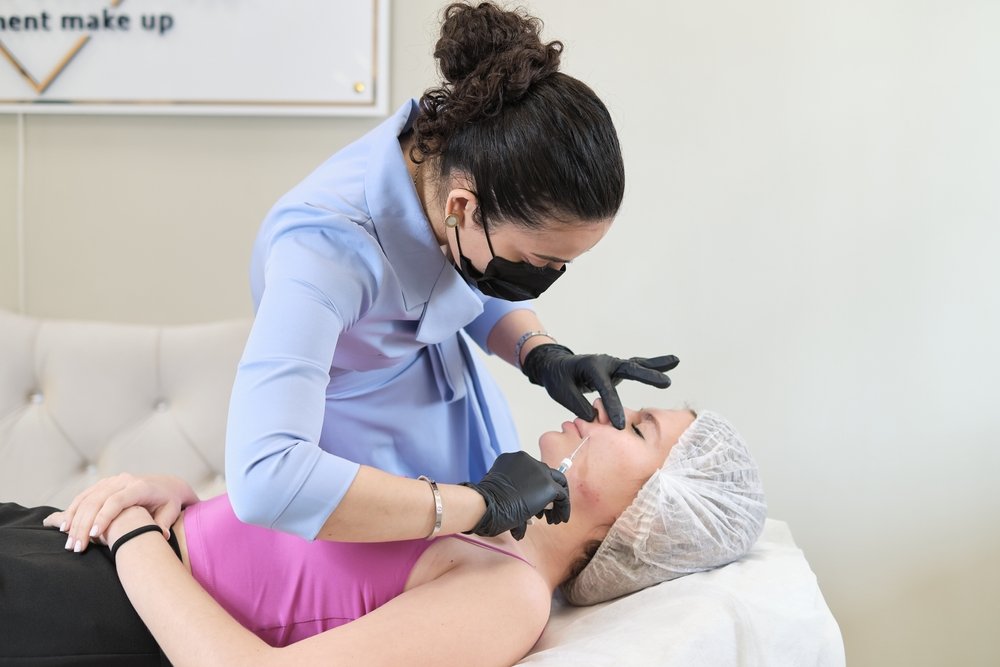
Dermal fillers for laugh lines in Pembroke Pines can be considered as part of an individualized aesthetic approach to addressing these age-related changes. Rather than simply filling a visible crease, an experienced provider evaluates the surrounding facial structure to understand what contributes to its appearance.
How Facial Fat Compartments Influence Smile Lines
Facial fat is not distributed evenly beneath the skin. It exists in separate superficial and deep compartments, each contributing to facial shape and support.
The deep medial cheek fat compartment helps maintain fullness around the central cheek, while superficial fat compartments contribute to the visible contours of the midface.
With aging, several changes may occur:
- Volume reduction: Certain fat compartments lose fullness, creating a less supported appearance.
- Fat redistribution: Changes in tissue position can alter the natural transition between the cheeks and lower face.
- Reduced structural support: The skin and soft tissues may become less supported as underlying structures change.
- Deeper facial folds: Changes around the cheeks and nose can make nasolabial folds more noticeable.
These changes do not happen at the same rate in everyone. Genetics, sun exposure, lifestyle, and natural facial anatomy all influence how smile lines develop.
Why Smile Lines Become Deeper With Age
Facial aging involves several interconnected processes. Collagen and elastin, which help maintain skin strength and flexibility, gradually decline. The skin also becomes thinner and may lose some of its ability to recover after repeated facial movements.
At the same time, changes in the facial retaining ligaments and underlying bone structure can influence how soft tissues are supported.
This explains why two people of the same age may have very different smile lines. One person may develop deeper folds because of midface volume changes, while another may have more visible lines because of skin quality, genetics, or facial structure.
Dermal fillers for laugh lines in Pembroke Pines may help address selected volume-related concerns, but the most appropriate treatment depends on identifying the anatomical factors contributing to each person’s folds.
Why Treating the Cheeks May Matter More Than Filling the Fold
An important consideration in facial rejuvenation is that the visible crease may not be the only area requiring attention.
When midface volume decreases, the transition between the cheeks and nasolabial region can become more pronounced. In suitable patients, restoring volume in selected cheek areas may improve facial proportions and reduce the visual prominence of the folds.
Direct treatment of the nasolabial folds may also be appropriate when the crease itself is a primary concern.
A qualified provider should consider:
- Existing cheek volume and facial proportions.
- The depth and location of nasolabial folds.
- Skin thickness and elasticity.
- Natural facial asymmetry.
- Previous cosmetic procedures and treatment history.
Dermal fillers for laugh lines in Pembroke Pines should be planned according to these anatomical differences rather than following a standard injection pattern for every patient.
What Types of Fillers Are Used for Laugh Lines?
Hyaluronic acid fillers are commonly used for facial volume restoration and the treatment of selected facial folds. Hyaluronic acid is a substance naturally found in the body that helps retain moisture and supports tissue hydration.
Different filler formulations have different properties, including thickness, flexibility, and lifting capacity. These characteristics influence which facial areas may be suitable for treatment.
The FDA has approved certain hyaluronic acid filler products for specific facial indications, including moderate to severe facial wrinkles and folds. However, approval varies by product and treatment area, so providers must follow the relevant labeling.
Results are temporary, and their duration varies according to the product, injection area, individual metabolism, and other factors.
Safety Considerations Before Getting Facial Fillers
Although dermal fillers are widely used, they are medical procedures and should never be treated as risk-free beauty treatments.
Common temporary effects include swelling, bruising, redness, tenderness, and discomfort around injection sites.
More serious complications can occur if filler enters a blood vessel. These may include tissue damage, vision abnormalities, and, in rare cases, blindness or stroke.
Patients should choose a qualified medical provider with appropriate anatomical knowledge, injection experience, and the ability to recognize and manage complications.
Dermal fillers for laugh lines in Pembroke Pines should always begin with a thorough consultation covering medical history, treatment expectations, possible risks, and suitable alternatives.
Choosing a Personalized Approach to Facial Rejuvenation
Natural-looking facial rejuvenation is not about eliminating every visible line. It is about understanding how facial structures change and selecting treatments that maintain individual features and proportions.
At Stellar Health and Skin, patients exploring aesthetic treatments can benefit from an individualized discussion about their facial concerns, treatment goals, and available options.
A personalized assessment can help determine whether direct fold correction, cheek volume restoration, or a combination of approaches may be appropriate.
For individuals considering dermal fillers for laugh lines in Pembroke Pines, understanding the relationship between facial fat compartments and skin aging is an important first step toward making informed treatment decisions.
Final Thoughts
Laugh lines develop through a combination of facial movement, collagen changes, fat compartment alterations, and gradual changes in underlying facial support. Recognizing these interconnected processes allows aesthetic providers to approach facial rejuvenation more thoughtfully.
Rather than focusing exclusively on the visible crease, a comprehensive assessment considers the entire midface and its natural proportions. With appropriate patient selection, product choice, and professional technique, dermal fillers may help soften selected folds while preserving natural facial expression.