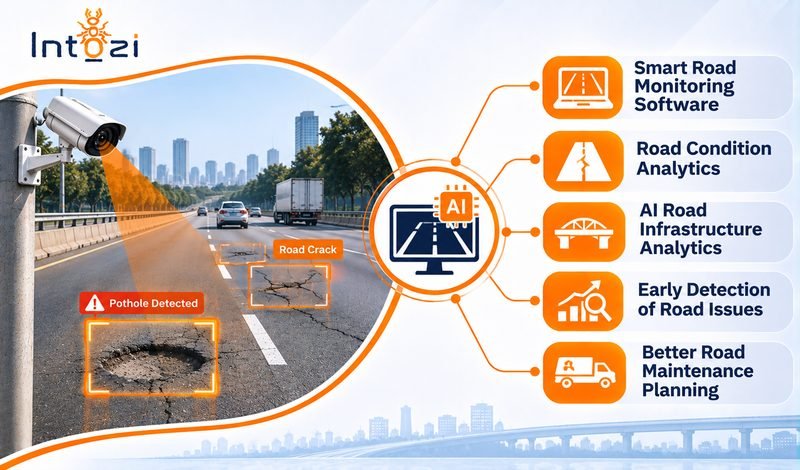

Road infrastructure requires continuous monitoring to maintain safe and reliable transportation networks. Potholes, surface cracks, damaged road markings, and other defects can affect vehicle movement, increase maintenance requirements, and create safety risks. smart road monitoring software is helping transportation authorities move beyond conventional surveillance by using artificial intelligence to analyse visual information, identify selected road conditions, and support more informed infrastructure management.
Traditional road inspections often depend on field surveys, manual reporting, and periodic assessments. Although these methods remain important, they can make it difficult to monitor extensive road networks frequently. AI-powered video analytics can add another layer of visibility by analysing footage captured through compatible traffic cameras, inspection vehicles, and other imaging systems.
This shift from traffic surveillance to road intelligence is not simply about observing vehicles. It is about using available visual information to identify infrastructure concerns, understand road conditions, and support timely maintenance decisions.
How AI Is Changing Road Infrastructure Monitoring
Conventional traffic surveillance primarily focuses on observing vehicle movement, traffic flow, and road activity. AI-powered road monitoring expands these capabilities by analysing visual information to identify selected infrastructure conditions.
Depending on the camera system, image quality, and analytics configuration, AI can help identify:
- Visible potholes and road surface damage.
- Surface cracks and irregularities.
- Damaged or faded road markings.
- Debris or objects obstructing roadways.
- Unusual road conditions that may require inspection.
- Changes in visible road conditions across monitored locations.
These capabilities can help authorities identify potential maintenance requirements without depending entirely on manual observation. However, AI-generated detections should be treated as inspection indicators rather than final engineering assessments.
How AI Pothole Detection Software Identifies Road Damage
AI pothole detection software uses computer vision models to identify visible potholes in road images or video footage. These models analyse surface patterns, shapes, textures, and other visual characteristics to identify areas that may require further inspection.
Potholes can develop due to water infiltration, repeated vehicle loads, temperature changes, and deterioration of road materials. When left unaddressed, they can affect vehicle handling and increase the likelihood of road incidents.
AI-based detection can support road maintenance teams by:
- Identifying visible potholes in monitored road sections.
- Recording the location of detected road defects when location data is available.
- Supporting the creation of inspection records.
- Helping prioritise areas for physical assessment.
- Comparing visual records to review changes over time.
The reliability of detection depends on camera angle, distance, resolution, lighting, weather, road conditions, and model validation. Physical inspection remains necessary to determine the actual depth, severity, and repair requirements of a pothole.
The Role of Pothole Detection Software in Road Maintenance
Pothole detection software helps transportation teams identify and document damaged road surfaces. Traditional inspections may require personnel to travel across different routes, manually record defects, and report maintenance requirements.
AI-assisted monitoring can make this process more organised by identifying potential potholes from suitable video or image sources. When integrated with location information and maintenance management systems, detections can be associated with specific road sections.
A practical monitoring workflow may involve:
- Capturing road footage through compatible cameras or inspection vehicles.
- Analysing images to identify potential potholes.
- Associating detected defects with available location information.
- Reviewing detections to confirm whether maintenance is required.
- Recording verified issues for maintenance planning.
- Monitoring subsequent footage to review changes after repairs.
This approach can help reduce the effort involved in identifying potential road defects, while keeping engineering teams responsible for validating and prioritising maintenance work.
How AI Road Damage Detection Helps Identify Surface Defects
AI road damage detection extends beyond potholes to include other visible forms of road deterioration. Depending on the model and image quality, computer vision systems can be configured to identify cracks, surface deterioration, damaged markings, and other visible irregularities.
Different types of road damage can require different inspection and maintenance approaches. Identifying the type and approximate location of a defect can therefore help authorities organise field assessments.
Common visual indicators include:
- Longitudinal and transverse cracks.
- Visible surface deterioration.
- Potholes and broken pavement sections.
- Damaged road edges.
- Faded or damaged road markings.
AI can help identify these conditions from images, but it cannot automatically establish the structural integrity of the road. More detailed engineering assessments may require specialised inspection equipment and physical testing.
Why Road Defect Detection Software Matters for Transportation Authorities
Road defect detection software can help authorities organise infrastructure observations across extensive road networks. Instead of relying only on isolated inspection reports, teams can use AI-assisted detection to identify potential defects and direct inspection resources towards areas that may need attention.
This can be particularly useful for:
- Monitoring urban roads with frequent vehicle movement.
- Reviewing highways and major transportation corridors.
- Identifying recurring road damage locations.
- Supporting maintenance planning across multiple road sections.
- Maintaining visual records of road conditions.
For effective use, detections should be connected to a clear review and reporting process. A system should also account for duplicate detections, changing weather conditions, temporary road obstructions, and differences in camera coverage.
How AI Road Inspection Software Supports More Consistent Assessments
AI road inspection software can help modernise infrastructure inspections by analysing road images and video footage to identify visible defects. It can support both fixed-camera monitoring and mobile inspection workflows, depending on the available infrastructure.
For example, inspection vehicles equipped with suitable cameras can capture footage while travelling along designated routes. AI models can then analyse the footage to flag potential defects for review.
This can support:
- More frequent visual observations across selected routes.
- Consistent identification of predefined defect categories.
- Faster preparation of preliminary inspection records.
- Easier comparison of road imagery over time.
- Better coordination between monitoring and maintenance teams.
AI-based inspection does not remove the need for trained inspectors. It helps identify areas that deserve attention, while technical teams assess defect severity and determine suitable repair methods.
How Smart Road Monitoring Software Improves Road Network Visibility
Smart road monitoring software combines video analytics and relevant road information to provide a clearer view of transportation infrastructure. It can help authorities monitor road conditions alongside traffic activity, depending on the system’s configuration.
When road monitoring is connected with traffic management and maintenance workflows, teams can review infrastructure concerns in the context of actual road usage.
Potential applications include:
- Monitoring visible road surface conditions.
- Identifying selected road defects from video footage.
- Observing traffic movement around damaged road sections.
- Supporting incident investigation through recorded footage.
- Maintaining records for infrastructure maintenance reviews.
Such capabilities can help transportation teams make better-informed decisions about inspection priorities and maintenance coordination.
Using Road Condition Analytics for Better Maintenance Planning
Road condition analytics involves analysing information about road surfaces and infrastructure to understand where defects occur and how conditions change over time.
AI video analytics can contribute visual information by identifying road defects and associating them with location and time data, where available. When combined with inspection reports, maintenance records, and traffic information, these observations can help authorities identify recurring problem areas.
For example, if similar surface defects repeatedly appear along a particular road section, maintenance teams can review the location and investigate possible underlying causes.
Road condition analysis can support:
- Identification of recurring defect locations.
- Comparison of road conditions across inspection periods.
- Maintenance prioritisation based on verified observations.
- Documentation of road repair activities.
- Better coordination between infrastructure and traffic management teams.
The value of these insights depends on consistent image capture, reliable location information, and accurate verification of detected defects.
How AI Road Infrastructure Analytics Supports Smarter Transportation Networks
AI road infrastructure analytics helps transportation authorities use visual and operational information to understand infrastructure conditions more effectively. Rather than treating road surveillance and road maintenance as separate activities, AI can support a more connected approach.
By combining road defect detection with traffic monitoring, authorities can gain insights into both infrastructure conditions and the surrounding transportation environment.
For example, identifying a damaged road section alongside information about traffic movement can help teams understand the potential operational impact and determine whether temporary traffic management measures may be required.
A connected road intelligence approach can support:
- Infrastructure condition monitoring.
- Road defect identification and documentation.
- Traffic and road-event observation.
- Maintenance coordination.
- Long-term infrastructure planning.
However, automated analytics should support—not replace—engineering inspections, road safety assessments, and official maintenance decisions.
Strengthening Road Intelligence With Intozi and Ikshana
Modern transportation networks need monitoring systems that can turn visual information into useful operational insights. Intozi provides AI video analytics solutions, while Ikshana is its Vision AI platform for supporting configurable video analytics applications. With suitable camera infrastructure, analytics configuration, and validation, these capabilities can help organisations monitor selected road conditions, identify visible infrastructure concerns, and improve the availability of information for road inspection and maintenance workflows.
Frequently Asked Questions (FAQs)
What is smart road monitoring software?
Smart road monitoring software uses technologies such as AI, computer vision, and video analytics to monitor road activity and identify selected infrastructure or traffic-related conditions. Intozi provides AI video analytics solutions, while Ikshana is its Vision AI platform for configurable monitoring applications.
How does AI pothole detection software work?
AI pothole detection software analyses road images or video footage to identify visual patterns associated with potholes. Detected locations can be recorded when location data is available and reviewed by inspection teams. Intozi and Ikshana can support configurable visual analytics applications where suitable camera infrastructure is available.
Can AI detect road cracks and other surface defects?
Yes. AI models can be configured to identify visible road cracks, potholes, and selected surface irregularities in suitable images or video footage. Intozi’s video analytics solutions and Ikshana can support visual monitoring applications, subject to model configuration and validation.
What is the difference between road monitoring and road condition analytics?
Road monitoring involves observing road activity and infrastructure conditions, while road condition analytics involves evaluating collected information to identify patterns, recurring defects, and maintenance priorities. Intozi and Ikshana can contribute visual information to these monitoring and analysis workflows.
Can existing CCTV cameras be used for road defect detection?
Existing CCTV cameras may be suitable when their positioning, resolution, field of view, and image quality meet the detection requirements. Some road inspection applications may require mobile cameras instead. Intozi and Ikshana support configurable video analytics applications using compatible camera infrastructure.
Does AI road inspection software replace manual road inspections?
No. AI road inspection software can help identify potential defects and organise inspection priorities, but physical assessments remain necessary to determine defect severity and repair requirements. Intozi and Ikshana can complement existing road inspection and maintenance processes through visual analytics.