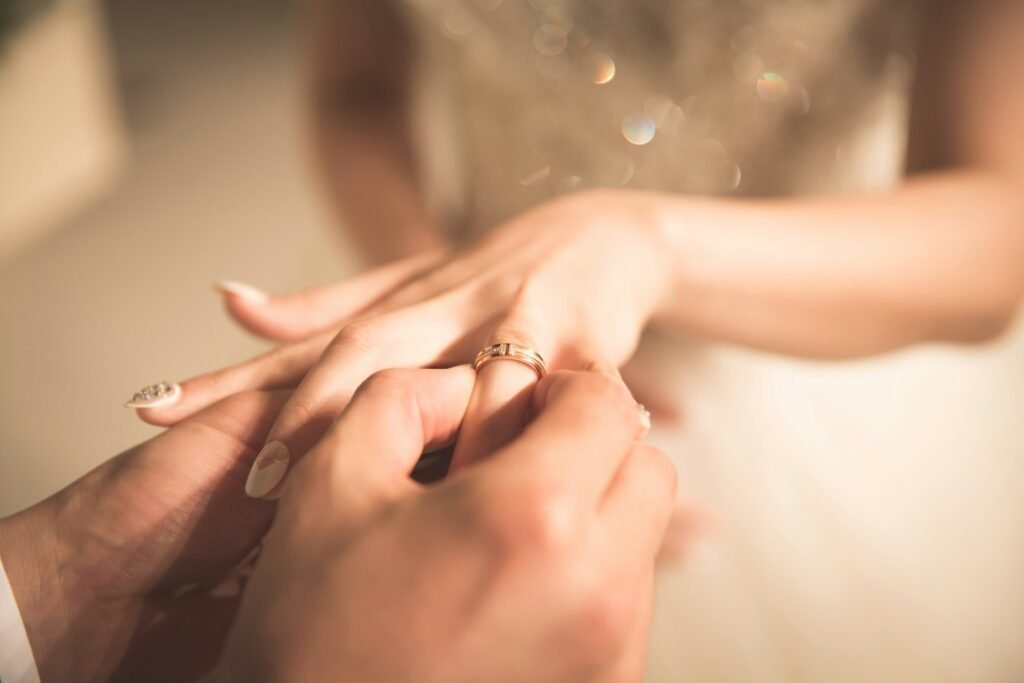

You found the right man, and your hands fit together effortlessly. The only problem? The ring doesn’t fit.
Whether he guessed your ring size incorrectly, your finger size has changed, or the jewellery store uses different sizing standards, receiving a wedding or engagement ring that’s too tight or too loose can be frustrating. This is especially true when the ring is made from precious metals and set with valuable gemstones.
The good news? From simple temporary fixes to professional resizing, several options can get you the comfortable, secure fit you want.

1. Ask the Jeweller About a Replacement or Exchange
Before trying any DIY adjustment, check the jeweller’s return, exchange, and resizing policy.
Many jewellers can resize a newly purchased ring or exchange it for the correct size, provided it meets their conditions. This can be the simplest solution if the ring is significantly too large or too small.
If the ring features an unusual design, intricate setting, or valuable gemstone, asking the original jeweller for help is particularly worthwhile. They may already know how the ring was constructed and whether resizing could affect its appearance or integrity.
2. Use a Spring Adjuster for a Quick Fix
If you need to wear the ring before you can have it professionally resized, a spring adjuster can provide a temporary solution.
These small inserts fit inside the ring and reduce the space between the band and your finger. They’re particularly useful for rings that are only slightly too large and can help prevent the ring from spinning or slipping off.
Spring adjusters are inexpensive and removable. However, they aren’t ideal as a long-term fix for every ring. They can also change how the ring feels against your skin.
3. Try a Ring Sizer or Sizing Beads
Another temporary option is a plastic ring sizer, sizing bar, or sizing beads.
Sizing beads are small metal beads placed inside the band by a jeweller. They reduce the internal space without requiring the entire ring to be cut and reshaped. They can be particularly helpful for people whose knuckles are larger than the base of their fingers, as the beads can help keep a ring securely positioned while allowing it to pass over the knuckle.
A jeweller can recommend the best option based on the ring and your finger shape.
4. Have the Ring Professionally Resized

If the ring is consistently uncomfortable, professional resizing is usually the best long-term solution.
For a ring that needs to be made larger, a jeweller may cut the band and insert a small piece of matching metal before soldering and polishing it. To make a ring smaller, the jeweller may remove a section of the band and reconnect it.
5. Consider the Ring’s Design
The metal isn’t the only factor that determines whether a ring can be resized. Its design matters just as much.
A simple, plain band is generally easier to resize than a ring covered in gemstones. Eternity rings, for example, have stones set around much or all of the band, leaving little room for a jeweller to cut and reshape the metal.
Rings with intricate patterns, engraving, tension settings, or gemstones positioned around the band can also require more specialised work. Resizing may potentially affect the setting, so the stones should be inspected before and after the repair.
The same applies to rings featuring valuable or unusual gemstones, including jewellery incorporating argyle pink diamonds. Because these stones can be exceptionally valuable, it’s especially important to have the ring assessed and handled by a qualified jeweller rather than attempting an adjustment at home.
Knowing Your Ring’s Material

How much a ring can be resized depends on its material, construction, gemstone setting, and how many sizes it needs to change.
Gold
Gold is one of the more straightforward metals to resize, particularly yellow and white gold rings with relatively simple bands. Rose gold can also be resized, although its composition and colour need to be carefully matched during the repair.
Gold Alloys
“Gold” doesn’t necessarily mean pure gold. Most jewellery is made from gold alloys, in which gold is combined with other metals to improve strength, durability, and colour. Common examples include 9K, 14K, and 18K gold, with the karat indicating the proportion of pure gold in the alloy.
Fortunately, many gold-alloy rings can be resized. However, the exact alloy, colour, construction, and design can affect how easily the work can be done. Yellow, white, and rose gold may require different techniques and matching alloys when a section of the band is added or removed.
Platinum
Platinum rings can generally be resized by an experienced jeweller, but working with the metal requires specialised skills and equipment. Choosing a jeweller experienced in platinum is important for maintaining a clean, seamless finish.
Silver
Sterling silver is relatively malleable and can often be resized. However, the jeweller still needs to assess the ring’s construction, especially if it has intricate details or gemstones.
Titanium, tungsten, and other alternative metals
Rings made from titanium, tungsten carbide, ceramic, and some other modern materials can be difficult or impossible to resize using traditional techniques. Some may need to be replaced rather than altered.
If your ring is made from an alternative metal, ask the jeweller about the manufacturer’s resizing or replacement options.
Unsure what your ring is made from?
Check the hallmark and have a professional jeweller assess the metal. They can identify the material, inspect the ring’s construction, and determine how much it can safely be resized without compromising the band or gemstone settings.
This is particularly important for rings with intricate details, multiple gemstones, or valuable stones. A jeweller can recommend whether traditional resizing, sizing beads, or replacing the ring would be the safest option.
Do’s and Don’ts of Adjusting Your Ring

Do:
- Do contact the original jeweller first. They can explain your exchange, resizing, and warranty options.
- Do get professionally measured. Your fingers can change size throughout the day because of temperature, activity, and other factors.
- Do ask for an assessment before resizing. A jeweller can determine whether your ring’s metal, stones, and design are suitable for alteration.
- Do consider a temporary adjuster. This can be useful while waiting for a permanent solution.
- Do have the ring inspected after resizing. The jeweller should check that gemstones are secure and the band is properly finished.
Don’t:
- Don’t try to cut, bend, heat, or stretch the ring yourself. DIY adjustments can damage the metal or loosen gemstones.
- Don’t use glue as a permanent solution. It can damage the ring and may make professional repairs more difficult.
- Don’t keep wearing a painfully tight ring. If your finger becomes numb, swollen, discoloured, or painful, remove the ring if you safely can and seek appropriate help.
- Don’t assume every ring can be resized. Some designs and alternative metals are better replaced than altered.
- Don’t rush the process. A wedding or engagement ring is meant to be worn for years, so getting the fit right is worth doing properly.
A Wrong Size Doesn’t Mean a Wrong Ring

An ill-fitting engagement or wedding ring can be disappointing, but it doesn’t have to spoil the moment. A temporary spring adjuster or sizing solution can help in the short term, while professional resizing can provide a comfortable, secure fit for years to come.
Author Bio: Carmina Natividad is a resident writer for Musson, a prestigious Australian fine jewellery house celebrated for its exquisite handcrafted creations and rare gemstones, including the world-renowned Argyle pink diamonds. She enjoys sharing practical insights on everything from wedding and styling tips to rare gems and jewellery trends.