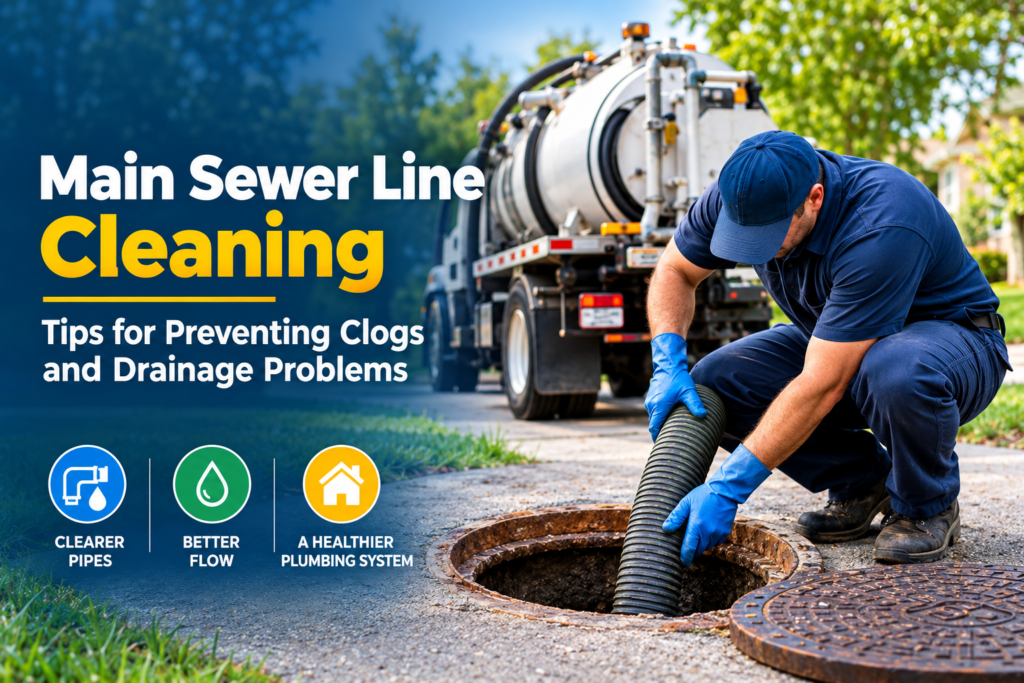

Your home’s sewer line plays an essential role in carrying wastewater away from sinks, toilets, showers, and other plumbing fixtures. When the main sewer line becomes clogged or damaged, it can cause slow drains, unpleasant odors, and wastewater backups. These problems can disrupt your daily routine and potentially lead to costly repairs if left unaddressed.
Understanding the warning signs, common causes, and maintenance practices can help homeowners protect their plumbing systems. Professional main sewer line cleaning is one way to address stubborn blockages and restore proper wastewater flow when ordinary drain cleaning methods are not enough.
What Is Main Sewer Line Cleaning?
The main sewer line is the primary pipe that transports wastewater from your home’s plumbing system to the municipal sewer system or an approved private wastewater system.
Over time, grease, debris, soap residue, and other materials can accumulate inside the pipe. Tree roots may also enter through cracks or joints, while older pipes can deteriorate and create recurring drainage problems.
Main sewer line cleaning involves removing obstructions from this primary drainage pipe. Depending on the condition of the line and the type of blockage, a plumber may use specialized drain-cleaning equipment, mechanical augers, or hydro jetting when appropriate.
The right cleaning method depends on the pipe material, the severity of the blockage, and whether the line has structural damage.
Common Signs of a Clogged Main Sewer Line
Recognizing sewer line problems early can help prevent more extensive plumbing issues. Homeowners should watch for the following warning signs.
1. Multiple Slow Drains
A single slow sink may have a localized clog. However, when several fixtures throughout your home drain slowly at the same time, the problem may involve the main sewer line.
2. Recurring Drain Backups
If toilets, tubs, or floor drains repeatedly back up despite previous cleaning attempts, there may be a blockage farther down the drainage system.
3. Unpleasant Sewer Odors
Persistent sewage smells around drains, bathrooms, or outdoor sewer access points may indicate a drainage problem. These odors should be investigated, particularly when accompanied by slow drainage or backups.
4. Gurgling Sounds
Gurgling noises from toilets or drains can occur when air moves irregularly through the plumbing system. If these sounds happen alongside multiple slow drains, they may indicate a developing sewer line issue.
5. Wastewater Backups
Wastewater backing up into a bathtub, shower, or floor drain can indicate a serious blockage. Stop using affected fixtures and arrange a professional inspection promptly.
What Causes Main Sewer Line Blockages?
Several factors can interfere with proper sewer line drainage.
- Grease and food waste: Oils and fats can accumulate inside pipes and contribute to stubborn blockages.
- Tree root intrusion: Roots may enter sewer pipes through small cracks or loose joints.
- Household debris: Excessive toilet paper, wipes, and other unsuitable materials can obstruct drainage.
- Pipe deterioration: Older, cracked, or misaligned pipes may collect debris and develop recurring problems.
- Foreign objects: Items accidentally flushed or washed into the drainage system can create obstructions.
Identifying the underlying cause is important because simply clearing a blockage may not resolve a damaged or deteriorating sewer line.
Benefits of Professional Sewer Line Cleaning
Professional cleaning can help address stubborn blockages and improve drainage throughout a property.
Restores Proper Wastewater Flow
Removing accumulated debris can help wastewater move through the sewer line more efficiently and reduce symptoms associated with blockages.
Helps Reduce Recurring Clogs
When a plumber identifies the source of repeated blockages, the recommended cleaning or repair can address the problem more effectively than repeatedly treating individual drains.
Supports Early Problem Detection
A professional inspection may reveal cracks, root intrusion, pipe misalignment, or other conditions that require additional attention.
Helps Protect Your Property
Addressing sewer line issues promptly can reduce the risk of prolonged wastewater backups and the property damage associated with them.
Common Methods Used for Sewer Line Cleaning
The cleaning method depends on the type and severity of the blockage.
Mechanical drain cleaning: A plumber may use a specialized auger or cable machine to break through or remove certain obstructions.
Hydro jetting: This method uses high-pressure water to remove suitable deposits and debris from the inside of a pipe. It is not appropriate for every plumbing system, so the pipe’s condition should be evaluated first.
Sewer camera inspection: A specialized camera can help locate blockages and identify possible pipe damage. This can be particularly useful when the same problem keeps returning.
If an inspection reveals a broken, collapsed, or severely damaged pipe, cleaning alone may not be sufficient. Repairs or replacement may be necessary.
How to Help Prevent Sewer Line Problems
Although not every sewer line issue can be prevented, a few practical habits can reduce avoidable blockages.
- Avoid pouring cooking grease, fats, and oils down kitchen drains.
- Dispose of wipes, paper towels, hygiene products, and other unsuitable materials in the trash.
- Use drain screens where appropriate to catch hair and debris.
- Pay attention to recurring clogs and unusual plumbing sounds.
- Arrange an inspection if multiple drains become slow or wastewater backs up.
- Consider professional maintenance when your property’s plumbing history or condition warrants it.
Homeowners should also avoid using harsh chemical drain cleaners repeatedly, as they may be unsuitable for certain pipes and may not resolve a blockage in the main sewer line.
When Should You Call a Professional Plumber?
A professional inspection is advisable when several drains are affected simultaneously, backups keep returning, sewage odors persist, or wastewater enters a bathtub or floor drain.
These symptoms may indicate a blockage beyond an individual fixture. A plumber can inspect the drainage system, determine the likely cause, and recommend an appropriate solution.
If wastewater is actively backing up, avoid using affected plumbing fixtures until the problem has been assessed. This can help limit further disruption and potential damage.
Final Thoughts
Main sewer line problems can affect the entire plumbing system, making early attention important for homeowners. Slow drains, repeated backups, gurgling noises, and persistent sewer odors are signs that should not be ignored.
Regular maintenance, careful disposal habits, and timely inspections can help reduce the risk of serious drainage problems. When a stubborn blockage occurs, professional main sewer line cleaning can help restore proper flow and identify issues that may require further repair.
For homeowners in Ponca City, understanding these warning signs and seeking appropriate plumbing assistance can help protect their property and maintain a dependable wastewater system.