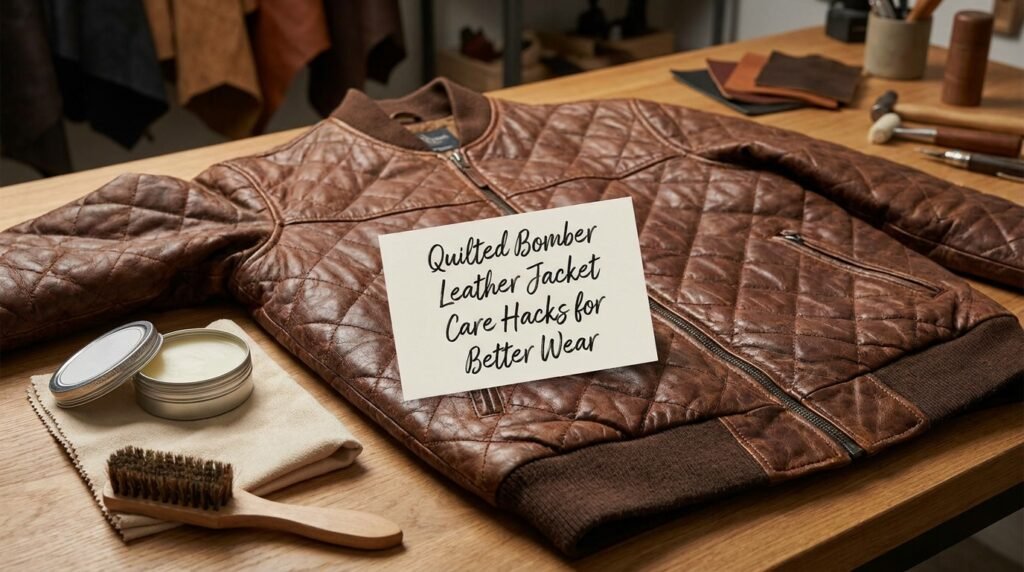

A quilted bomber leather jacket is one of those wardrobe pieces that can look better with age, provided it receives the right care. Its appeal comes from the combination of supple leather, structured quilting, ribbed trims, sturdy hardware, and the unmistakable bomber silhouette. However, these same details require thoughtful maintenance. Leather can dry out, absorb moisture, develop stains, or lose its finish when neglected, while quilted panels can become flattened or distorted through improper cleaning and storage.
The good news is that caring for a leather bomber does not have to be complicated. A consistent routine involving gentle cleaning, appropriate conditioning, careful drying, and smart storage can help maintain its appearance and structural integrity for years. Whether the jacket is worn regularly during cool weather or reserved for special occasions, a few simple habits can make a noticeable difference in how it looks and feels.
Understand What Makes Quilted Leather Different
Before establishing a care routine, it helps to understand the construction of the garment. A quilted bomber typically combines an exterior leather shell with stitched sections that contain a layer of insulation or padding. The quilting provides visual texture while also helping the jacket retain warmth. Around the waist and cuffs, rib-knit fabric is commonly used to create the fitted bomber profile.
Each material responds differently to moisture, friction, heat, and cleaning products. Leather benefits from controlled hydration, whereas excessive moisture can affect both leather and internal padding. Ribbed sections may stretch if the jacket is stored incorrectly, and aggressive brushing can damage the surface finish.
| Jacket Area | Primary Concern | Best Care Approach |
|---|---|---|
| Leather exterior | Dryness, stains, scratches | Gentle wiping and suitable leather conditioner |
| Quilted panels | Flattening, trapped moisture | Light cleaning and thorough air drying |
| Ribbed cuffs | Stretching and pilling | Gentle handling and proper storage |
| Metal hardware | Tarnishing and surface scratches | Dry wiping and careful handling |
| Interior lining | Odor and perspiration buildup | Air circulation and professional cleaning when necessary |
Brush Away Surface Dust Regularly
One of the easiest ways to protect leather is to prevent everyday dirt from accumulating. Dust, road particles, and small amounts of debris can settle into seams and quilting, particularly around the shoulders, sleeves, pockets, and collar. Over time, repeated friction can cause these particles to work against the leather surface.
After wearing the jacket, inspect it under good lighting. Use a soft, clean microfiber cloth to remove loose dust. For textured or quilted areas, a very soft garment brush can help lift particles without applying excessive pressure. Avoid stiff brushes, abrasive sponges, and anything that could scratch the finish.
This quick routine is especially useful after commuting, traveling, or spending time outdoors. Regular light maintenance is generally safer than waiting until the jacket has accumulated heavy grime that requires aggressive cleaning.
Deal With Spills Immediately
Accidents happen, particularly when a leather jacket is worn frequently. Coffee, food, rainwater, cosmetics, and oily substances can all leave marks if they remain on the surface. The key is to respond quickly without turning a small spill into a larger cleaning problem.
For a fresh liquid spill, gently blot the affected area with a clean, dry cloth. Do not rub vigorously, because friction can spread the substance and potentially alter the leather’s finish. Once the excess liquid has been absorbed, allow the jacket to dry naturally in a well-ventilated area.
For unknown stains or substantial spills, check the manufacturer’s care instructions before applying any cleaner. Leather finishes vary considerably, so a product that works safely on one jacket can potentially discolor another. When in doubt, professional leather cleaning is the safer option.
Choose Leather-Safe Conditioning Products
Leather is a natural material and can gradually lose some of its flexibility when exposed to dry air, repeated wear, or unsuitable storage conditions. A quality leather conditioner can help maintain suppleness and reduce the likelihood of excessive dryness.
However, conditioning should not become an everyday activity. Applying too much product can leave the surface greasy, darken certain types of leather, or interfere with the original finish. Always select a conditioner specifically intended for the type of leather involved and test it first on a small, inconspicuous area.
A sensible conditioning process involves cleaning surface dust first, applying a small amount of product with a soft cloth, and distributing it evenly. Allow the jacket to absorb the conditioner according to the product instructions before buffing away any excess.
Pick the Right Quilted Bomber for Your Routine
Care begins before the first wear. Choosing a jacket that matches your lifestyle can make long-term maintenance considerably easier. Someone who wears a bomber every day for commuting may prioritize durable leather, strong stitching, practical pockets, and resilient ribbed trims. A person looking for a statement layer may instead focus on distinctive quilting, color, hardware, and a particular leather finish.
For shoppers comparing different silhouettes and constructions, browsing a curated range of a Mens quilted bomber leather jacket can help identify options suited to different wardrobes and wearing habits. Pay attention to construction details rather than judging the garment solely by its appearance. Consistent quilting, secure seams, smooth hardware, and well-finished cuffs are useful indicators of thoughtful construction.
Keep Your Jacket Away From Excessive Heat
One of the most damaging mistakes is attempting to speed up the drying process with direct heat. Hair dryers, radiators, heaters, tumble dryers, and strong sunlight can remove moisture too rapidly from leather and may contribute to stiffness, cracking, shrinkage, or changes in surface appearance.
If your bomber becomes wet, gently shake off excess water and hang it on a broad, sturdy hanger. Let it dry naturally at room temperature with sufficient airflow. Avoid folding it while damp, because trapped moisture can contribute to unpleasant odors and potentially affect the lining or quilting.
Once completely dry, inspect the jacket before returning it to storage. If the leather appears unusually dry after significant exposure to water, follow the manufacturer’s recommendations regarding conditioning.
Protect the Quilting From Compression
The quilted sections give a bomber jacket much of its distinctive character. Constant compression can flatten padded areas and reduce the clean, dimensional appearance of the stitching. Avoid piling heavy clothing on top of the jacket when it is stored in a wardrobe or closet.
Use a broad, padded, or otherwise supportive hanger that distributes the jacket’s weight across the shoulders. Narrow wire hangers can create pressure points and may distort the shoulder area over time.
When traveling, avoid squeezing a quilted leather bomber into an overstuffed suitcase. If folding is unavoidable, keep the number of folds to a minimum and remove the jacket from the luggage as soon as possible. Give it time to hang naturally and regain its shape.
Give the Jacket Space to Breathe
Leather garments benefit from ventilation. Storing a jacket in a tightly packed closet can restrict airflow and encourage odor buildup, particularly when the garment has been worn for several hours. Whenever possible, leave enough space around the bomber for air to circulate.
For longer-term storage, a breathable garment bag is preferable to an airtight plastic cover. Plastic can trap humidity against the leather and create an unsuitable environment for extended storage. Keep the jacket somewhere cool, dry, and away from direct sunlight.
- Use a sturdy, broad hanger to support the shoulders.
- Keep the jacket away from radiators, heaters, and direct sunlight.
- Choose a breathable garment cover for extended storage.
- Do not store leather while it is damp or heavily compressed.
- Leave space around the jacket for adequate airflow.
Care for Cuffs, Collar, and Hardware
The leather body is not the only area that needs attention. Bomber cuffs and collars often experience substantial contact with skin, hair, bags, and other clothing. These areas can collect oils and gradually show signs of wear.
Inspect ribbed sections periodically for loose threads, excessive stretching, or pilling. Remove minor lint carefully rather than pulling individual fibers. If a seam begins to loosen, address it early. Small repairs are generally easier to manage before a loose stitch develops into a larger structural issue.
Hardware deserves similar attention. Zippers, snaps, and buckles should operate smoothly without excessive force. If a zipper begins catching, inspect it for fabric or debris rather than repeatedly pulling it. Aggressive force can damage both the zipper and the surrounding leather.
Maintain Women’s Quilted Bomber Styles With the Same Fundamentals
Leather care principles apply regardless of whether a bomber is designed around a traditionally masculine, feminine, or unisex silhouette. Differences in cut, hardware, quilting patterns, colors, and finishes may affect how a garment looks, but the underlying maintenance priorities remain similar: minimize unnecessary moisture, avoid harsh chemicals, protect the leather from excessive heat, and store the jacket correctly.
When exploring a Womens quilted bomber leather jacket, consider how its proportions and detailing fit into your existing wardrobe as well as how frequently you expect to wear it. A versatile color and practical construction can make the jacket easier to integrate into everyday outfits, which also encourages consistent care rather than leaving it neglected between occasional wears.
Build a Simple Maintenance Schedule
Leather jacket care becomes much easier when it is treated as a routine instead of an emergency response. A few minutes after regular wear can prevent larger problems later. The following sequence works as a practical starting point, while the manufacturer’s specific care instructions should always take priority.
- After wearing: Check the jacket for visible dust, moisture, stains, or debris.
- Weekly during frequent use: Wipe the surface gently with a clean microfiber cloth and inspect seams, cuffs, and hardware.
- After exposure to rain: Allow the jacket to dry naturally before putting it away.
- Periodically: Assess the leather for dryness and use an appropriate conditioner only when needed.
- Before seasonal storage: Make sure the jacket is clean and completely dry, then hang it in a breathable garment cover.
This approach also makes it easier to spot problems early. A small stain, loose thread, or malfunctioning zipper is much easier to address than extensive damage discovered months later.
Know When Professional Cleaning Is the Better Choice
Not every cleaning problem should be handled at home. Deep stains, significant water exposure, persistent odors, dye transfer, or changes in the leather’s finish can require specialized treatment. Attempting to remove difficult marks with household detergents, alcohol, solvents, or strong stain removers can permanently damage leather.
Professional leather specialists understand that different hides and finishes require different cleaning methods. Before sending a jacket for treatment, ask whether the service has experience with quilted leather garments. The internal padding and stitched construction can require more careful handling than a simple unlined leather item.
Common Care Mistakes to Avoid
Many leather jackets suffer damage not because their owners ignore them, but because they use techniques that seem logical but are too aggressive. Avoid these common mistakes:
- Machine washing: Unless the manufacturer explicitly states otherwise, avoid putting a leather bomber in a washing machine.
- Excessive conditioner: More product does not necessarily mean better protection.
- Direct heat: Never use a radiator or hair dryer as a shortcut for drying.
- Harsh household cleaners: Detergents and solvents can strip or alter leather finishes.
- Plastic storage: Long-term airtight storage can trap unwanted moisture.
- Overloaded closets: Constant pressure can distort quilted panels and shoulders.
- Ignoring small repairs: Loose stitching and damaged hardware can become bigger problems when left untreated.
Frequently Asked Questions (FAQs)
How often should I condition a quilted leather bomber jacket?
There is no universal schedule because leather type, finish, climate, and frequency of wear all influence conditioning needs. Inspect the leather periodically and follow the manufacturer’s care recommendations. Always test a conditioner on an inconspicuous area first.
Can I wash a quilted leather bomber jacket at home?
Generally, leather garments should not be machine washed unless the care label specifically permits it. For substantial cleaning needs, professional leather cleaning is usually a safer choice.
What should I do if my leather bomber gets soaked?
Remove excess water gently, place the jacket on a sturdy hanger, and allow it to air-dry naturally at room temperature. Keep it away from direct heat and avoid wearing or storing it while damp.
How should a quilted leather bomber be stored during summer?
Clean and completely dry the jacket before storage. Hang it on a broad, supportive hanger and use a breathable garment bag. Store it in a cool, dry location away from direct sunlight, excessive humidity, and heat sources.
Keep Your Quilted Bomber Looking Its Best
A quality quilted bomber leather jacket can become a dependable wardrobe staple when it is treated with the right level of care. The most effective strategy is not complicated: remove surface dirt regularly, respond quickly to spills, avoid excessive heat and moisture, condition the leather appropriately, and protect the quilted construction during storage.
Small habits ultimately make the biggest difference. Give your jacket room to breathe, inspect it regularly, and address minor issues before they become major repairs. With consistent maintenance, the leather can retain its character, the quilting can stay well defined, and the bomber silhouette can continue looking polished season after season.
Make your leather jacket care routine part of your wardrobe routine, and give your favorite bomber the attention it needs to deliver better wear for years to come.