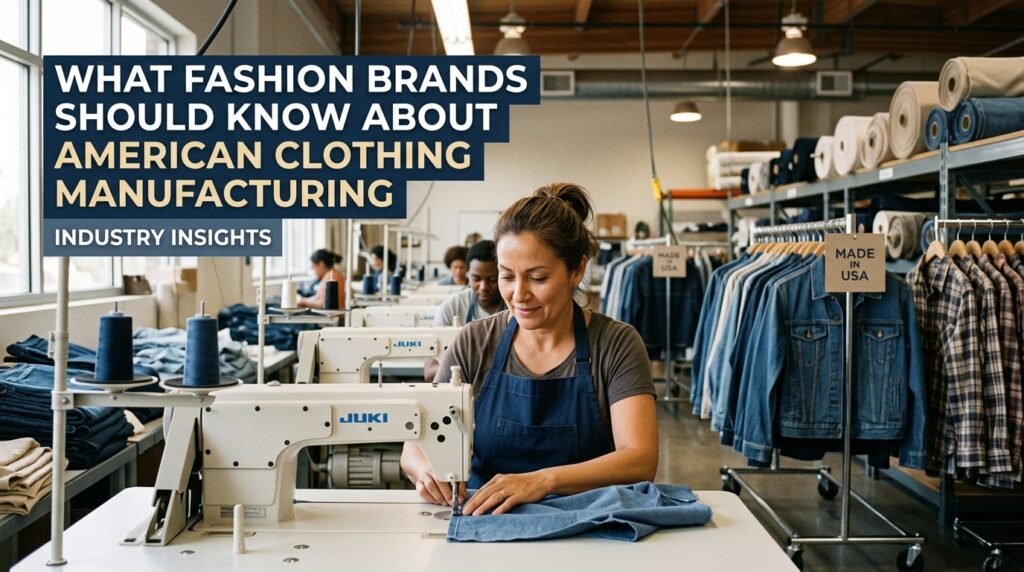

For fashion brands competing in an increasingly crowded market, manufacturing is more than a back-end function. It is a strategic part of the brand experience. The factory a company chooses can influence product quality, delivery reliability, production flexibility, customer satisfaction, and ultimately profitability.
American clothing manufacturing can offer fashion businesses a compelling combination of craftsmanship, communication, quality oversight, and supply-chain visibility. For brands that want greater control over how products are developed and produced, working with domestic manufacturing partners can make it easier to maintain consistent standards while responding quickly to changing market conditions.
That does not mean every American manufacturer is automatically the right fit. Fashion companies still need to evaluate production capabilities, materials, minimum order quantities, quality-control systems, lead times, customization options, and scalability. The strongest partnerships are built around operational alignment rather than geography alone.
For established labels and emerging brands alike, understanding how to evaluate domestic manufacturing can create a stronger foundation for sustainable growth. It can also open opportunities to expand beyond traditional garments into complementary accessories that increase average order value and strengthen brand identity.
Why Manufacturing Strategy Matters to Modern Fashion Brands
A fashion brand’s reputation is closely connected to the physical products customers receive. An attractive campaign may bring a shopper to an online store, but the quality of the garment determines whether that customer becomes a repeat buyer.
Problems such as inconsistent measurements, weak seams, inaccurate colors, poor finishing, or late deliveries can quickly become expensive. Returns increase, customer-service workloads rise, and negative reviews can damage future sales. For seasonal collections, delays can be particularly damaging because missing a launch window may leave a brand with inventory arriving after demand has peaked.
A capable manufacturing partner helps reduce these risks by establishing repeatable processes throughout product development and production. This includes reviewing specifications, selecting suitable materials, producing samples, inspecting finished goods, and maintaining communication throughout the manufacturing cycle.
Domestic production may also provide greater visibility for brands that want closer relationships with their manufacturing partners. When communication is efficient, design teams can resolve technical questions more quickly and make informed decisions before small problems become expensive production issues.
What to Look for in American Clothing Manufacturers
Choosing a production partner requires more than comparing quoted unit prices. A low initial quotation can become expensive if the manufacturer has difficulty meeting specifications, maintaining quality, or delivering orders on schedule.
Fashion brands should evaluate potential partners across several operational categories. Experience is important, but so are technical capabilities, production capacity, communication practices, quality-control procedures, and willingness to support the product-development process.
- Product expertise: Look for experience with the types of garments, materials, construction methods, and finishing techniques your collection requires.
- Sampling capabilities: A reliable sampling process allows designers to identify fit, construction, material, and aesthetic issues before bulk production begins.
- Quality assurance: Manufacturers should have clear inspection procedures rather than relying exclusively on final visual checks.
- Production capacity: The partner should be capable of handling current requirements while having a realistic path to support future growth.
- Communication: Clear and responsive communication is essential when specifications, timelines, or materials change.
- Customization: Brands should determine how effectively a manufacturer can accommodate custom labels, fabrics, trims, packaging, colors, and construction details.
Brands looking for a domestic production relationship can investigate established American clothing manufacturers and assess how their capabilities align with the company’s product roadmap. The objective should be to find a manufacturing partner that can support both today’s collection and tomorrow’s expansion.
Quality Control Should Begin Before Production
Quality control is often misunderstood as an inspection performed after a product has been manufactured. In reality, effective quality management begins much earlier.
A well-structured manufacturing process starts with accurate technical information. Tech packs should communicate measurements, construction details, fabric specifications, color references, stitch requirements, labeling instructions, and other relevant production information. The clearer these instructions are, the less room there is for interpretation.
Pre-production samples are another critical checkpoint. Fashion brands should physically evaluate samples rather than approving products based solely on digital drawings or photographs. Fit should be assessed on appropriate body types, while fabrics and trims should be tested for their intended use.
Brands should also pay attention to details that consumers may notice immediately, including seam alignment, stitching consistency, zipper performance, button attachment, label positioning, print quality, and finishing.
| Manufacturing Area | What Brands Should Evaluate | Why It Matters |
|---|---|---|
| Materials | Fabric weight, composition, durability, color consistency | Influences comfort, appearance, longevity, and perceived value |
| Construction | Seam strength, stitching, reinforcement, finishing | Determines structural integrity and product lifespan |
| Fit | Measurements, grading, proportions, wear testing | Reduces returns and improves customer satisfaction |
| Branding | Labels, embroidery, printing, trims, packaging | Creates a consistent customer-facing brand experience |
| Production | Batch consistency and inspection procedures | Helps ensure every customer receives the expected product |
Establishing quality standards before cutting begins gives both the brand and manufacturer a shared definition of an acceptable finished product.
Domestic Manufacturing and Supply-Chain Visibility
Supply-chain visibility has become increasingly important for fashion businesses. Brands need to understand where products are being made, which materials are being used, and how production schedules are progressing.
Shorter communication channels can make domestic manufacturing attractive to companies that prioritize responsiveness. Design teams may be able to discuss technical questions directly with production personnel instead of relying on multiple layers of intermediaries.
This can be particularly valuable when developing a new product. A designer may discover that a particular fabric behaves differently during cutting or sewing than expected. An experienced manufacturer can suggest construction adjustments, alternative materials, or production techniques that preserve the intended aesthetic while improving manufacturability.
Domestic manufacturing can also make smaller production runs or iterative product development more practical for certain businesses. Rather than committing immediately to enormous quantities, a brand may prefer to test a product, evaluate customer response, and then increase production based on real demand.
Using Accessories to Expand a Clothing Brand
Fashion brands do not have to limit their product strategy to apparel. Accessories can create additional revenue opportunities while reinforcing the visual language of a clothing collection.
Bags are especially useful because they combine fashion with everyday functionality. Unlike fitted garments, they generally do not require customers to choose among multiple sizes. This makes them natural additions to online stores, seasonal collections, promotional campaigns, and lifestyle-oriented product lines.
Cross-body bags, for example, can complement streetwear, travel, casual, outdoor, and contemporary fashion collections. Brands can customize colors, materials, hardware, logos, straps, pockets, and other details to create a product that feels connected to the wider collection.
When evaluating wholesale cross body bags bulk options, fashion businesses should consider more than appearance. Construction quality, strap durability, hardware strength, pocket configuration, fabric performance, and finishing should all support the intended positioning of the brand.
Tote Bags Can Become Everyday Brand Assets
The tote bag has evolved far beyond its origins as a simple carryall. Today, consumers use totes for commuting, shopping, school, travel, work, fitness, and everyday errands. That versatility gives fashion companies considerable room to position a well-designed tote within different customer segments.
A premium tote can also function as an extension of a brand’s visual identity. A recognizable logo, distinctive color palette, signature textile, custom lining, or unique handle treatment can transform a functional item into a recognizable piece of branded merchandise.
Material selection is particularly important. Heavy canvas can create a rugged, durable aesthetic, while lighter textiles may suit minimalist or fashion-forward collections. Leather accents, reinforced handles, internal compartments, closures, and structured bases can elevate the perceived quality of a tote.
Brands considering wholesale tote bags should establish specifications before placing a production order. These may include dimensions, fabric weight, handle length, stitching requirements, pocket placement, color standards, branding techniques, and packaging.
Because totes are highly visible in public spaces, they can also provide a form of ongoing brand exposure. Customers effectively carry the brand identity with them, turning a functional accessory into a subtle marketing channel.
The Opportunity in Laptop and Work Bags
Changes in working patterns have created new opportunities for fashion brands interested in functional accessories. Professionals, students, freelancers, travelers, and hybrid workers frequently carry laptops and other electronic devices between home, office, campus, cafés, and travel destinations.
This creates demand for bags that combine practical protection with a more refined appearance. A laptop bag does not necessarily need to look like traditional corporate equipment. Contemporary designs can incorporate fashion-oriented materials, colors, silhouettes, and branding while retaining protective functionality.
Manufacturing considerations become more complex when a bag is designed for technology. Internal padding, compartment dimensions, lining materials, zipper construction, reinforced attachment points, and strap ergonomics all need to be considered during development.
A brand exploring wholesale canvas laptop bags should evaluate the balance between material character and protection. Canvas can provide a distinctive, tactile appearance, but the overall design still needs appropriate reinforcement and internal organization for the intended device and customer.
These products can be particularly effective for lifestyle brands because they bridge fashion and utility. A company can create a coordinated ecosystem in which apparel, bags, and other accessories share materials, colors, logos, and design cues.
How to Build a Reliable Manufacturing Workflow
The best manufacturing relationships are supported by a disciplined workflow. Brands should avoid treating production as a single transaction and instead create a repeatable process that can be used across collections.
- Define the product concept. Establish the target customer, intended use, price positioning, aesthetic direction, and performance requirements.
- Create detailed specifications. Develop technical drawings, measurements, fabric requirements, color references, trims, labels, and construction instructions.
- Review material feasibility. Confirm that selected fabrics, hardware, linings, and other components are suitable for the product and production method.
- Develop samples. Produce prototypes and evaluate fit, function, appearance, durability, and construction.
- Make controlled revisions. Document changes carefully so the approved version is unambiguous before bulk production.
- Set quality requirements. Establish inspection criteria, acceptable defect levels, packaging requirements, and labeling standards.
- Begin production. Monitor the manufacturing process and maintain communication regarding materials, quantities, and delivery schedules.
- Inspect finished inventory. Review production batches before distribution to identify defects or inconsistencies.
- Evaluate performance. Use customer feedback, returns, sales velocity, and product reviews to guide future production runs.
This structured approach helps transform manufacturing from a reactive activity into a strategic operating system. It also makes it easier to identify where problems originate when a product does not perform as expected.
Balancing Cost, Quality, and Scalability
Manufacturing decisions inevitably involve trade-offs. The cheapest production option is not necessarily the most profitable, particularly if it creates higher return rates, inconsistent quality, excessive waste, or delayed deliveries.
Brands should instead evaluate total commercial value. A slightly higher manufacturing cost may be justified if the resulting product has better durability, stronger customer satisfaction, lower return rates, or greater perceived value.
Scalability also deserves careful consideration. A manufacturer may be an excellent choice for an initial collection but struggle to support a rapidly growing brand. Conversely, a large production operation may not provide the flexibility or attention required by a smaller label.
The right partner should therefore match the brand’s current scale while offering a realistic pathway for growth. Capacity, production scheduling, material sourcing, reorder processes, and communication should all be discussed before a long-term commitment is made.
Key Questions to Ask Before Choosing a Manufacturer
Fashion executives can improve the vendor-selection process by asking targeted questions early. The answers help reveal whether a manufacturer is genuinely equipped for the brand’s requirements.
- What types of apparel and accessories does the manufacturer specialize in?
- What production quantities can the facility support?
- What are the minimum order requirements?
- How does the sampling and approval process work?
- What quality-control procedures are used?
- How are material substitutions or production changes communicated?
- Can the manufacturer handle custom labels, packaging, trims, and branding?
- What are the expected production lead times?
- How does the company handle reorders and urgent production requirements?
- Can the manufacturing partner support both apparel and complementary accessories?
These questions help brands compare manufacturers based on operational fit rather than simply choosing the lowest quoted price.
Frequently Asked Questions (FAQs)
What makes American clothing manufacturing attractive to fashion brands?
Domestic manufacturing can provide advantages such as closer communication, increased production visibility, quality oversight, and potentially greater responsiveness during product development. The exact benefits depend on the capabilities of the individual manufacturer.
Should a fashion brand manufacture accessories alongside clothing?
Accessories can be a useful extension of an apparel collection. Bags and other carry products generally avoid garment sizing issues while providing opportunities for cross-selling, branding, and increased average order value.
How important are pre-production samples?
Pre-production samples are essential because they allow brands to identify problems with fit, construction, materials, colors, hardware, and finishing before committing to a larger production run.
What should brands include in a manufacturing tech pack?
A comprehensive tech pack may include technical drawings, measurements, grading information, fabric composition, fabric weight, color references, stitch specifications, trims, labels, packaging instructions, and other product-specific requirements.
Can smaller fashion brands work with domestic manufacturers?
Potentially, although minimum order quantities, production capacity, product complexity, and the manufacturer’s business model will determine suitability. Brands should discuss quantities and growth expectations before selecting a partner.
Build a More Resilient Fashion Brand Through Better Manufacturing
American clothing manufacturing can be a strategic asset for fashion companies that value quality, communication, supply-chain visibility, and long-term product consistency. The most successful relationships are not based solely on location. They are built around shared expectations, technical expertise, transparent communication, reliable quality control, and the ability to grow together.
For fashion brands, the opportunity extends beyond garments. Complementary products such as cross-body bags, totes, and laptop bags can broaden the product portfolio, reinforce brand identity, and create additional revenue streams without introducing the fit complexity associated with apparel.
The next step is to evaluate manufacturing partners against your actual product requirements, commercial objectives, quality expectations, and growth plans. A carefully selected production relationship can give your brand the operational foundation it needs to turn strong designs into consistently successful products.
Ready to strengthen your apparel and accessory production strategy? Start evaluating manufacturing capabilities, define your quality standards, and choose a production partner that can support your brand from the next collection through long-term growth.