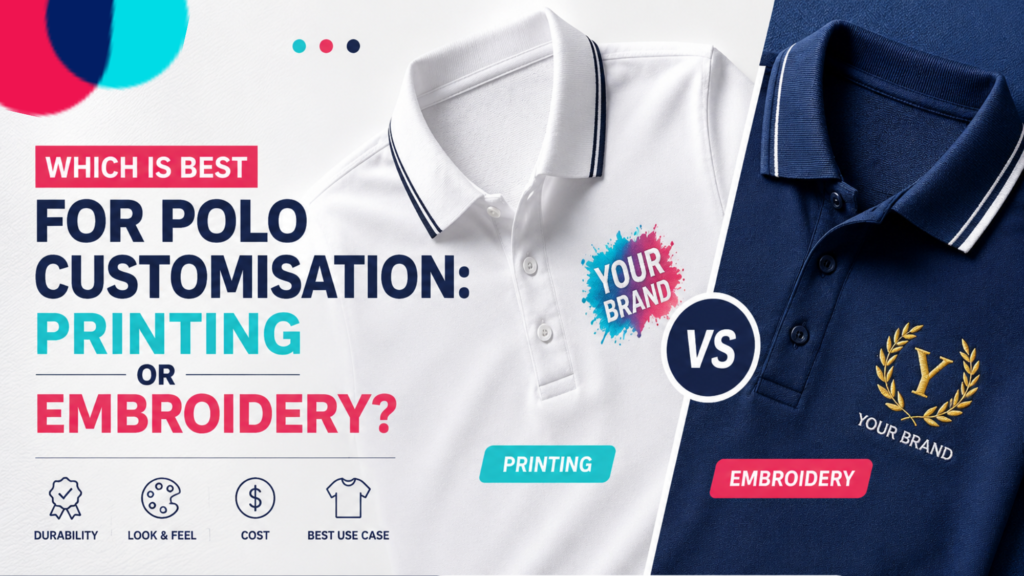

Neither printing nor embroidery is universally “best” for polo shirts — the right choice depends on your logo’s complexity, the fabric of the polo itself, your order size, and how the shirt will actually be worn. That said, embroidery is generally the stronger default for polos specifically, for reasons that come down to the fabric polos are usually made from, not just tradition.
Here’s how to actually make the call for your own order.
Why polos are a special case
Most polo shirts are made from pique knit fabric — the raised, waffle-textured cotton (or cotton-blend) weave you can feel and see on almost every polo shirt. That texture isn’t just a style choice; it directly affects how well each decoration method performs.
Pique’s raised surface has more texture and less flat, even surface area than a plain jersey t-shirt. According to a detailed breakdown of pique fabric construction, the fabric’s alternating tightly and loosely woven sections create that signature textured feel — but the same texture that makes pique breathable and durable also makes it a trickier surface for flat printing to sit cleanly on. Ink applied to pique can settle unevenly into the raised and recessed sections of the weave, which is part of why embroidery has become the default for polo branding: thread sits on top of the texture rather than trying to print evenly across it.
This is the main reason polos behave differently to t-shirts in this comparison — it’s less about which method is “better” in general and more about which one suits this specific fabric.
Embroidery on polos: strengths and limits
- Strengths: Clean, professional finish that sits well on pique’s textured surface; highly durable through repeated industrial washing; premium, raised look that reads well in corporate and client-facing settings; holds up better over years of wear than most printing methods.
- Limits: Not well suited to fine detail, gradients, or photographic designs — very small text or intricate logos can lose clarity when stitched; cost scales per unit rather than dropping significantly at higher volumes, unlike screen printing.
- Best for: Simple, bold logos and text; corporate uniforms; workwear needing to survive years of regular washing; any order where a premium finish matters more than fine visual detail.
If you’re leaning toward this option, it’s worth looking at our embroidery service page for the specifics of how the process works and what’s involved before ordering.
Printing on polos: strengths and limits
- Strengths: Handles detailed, multi-colour, or photographic designs that embroidery can’t reproduce cleanly; often more cost-effective at larger volumes when using screen printing; flat, vibrant colour reproduction.
- Limits: Pique’s textured surface can cause ink to sit unevenly compared to a flat-weave t-shirt, occasionally affecting sharpness on fine detail; printed designs on polos generally don’t last as many wash cycles as embroidery does; a less premium, more casual finish for corporate settings specifically.
- Best for: Detailed or colour-heavy logos; promotional or event polos with a shorter expected lifespan; larger bulk orders where per-unit cost matters more than long-term durability.
If a detailed design makes printing the better fit for your order, our digital garment printing service is generally the better-suited printing method for polos specifically, since it handles pique’s texture more predictably than screen printing does for complex designs.
A practical comparison
| Factor | Embroidery | Printing |
|---|---|---|
| Best for logo type | Simple, bold logos and text | Detailed, multi-colour, photographic designs |
| Durability | Very high — holds up over years of washing | Moderate — depends on method and fabric |
| Look and feel | Raised, premium, textured | Flat, vibrant, more casual |
| Cost at small volumes | Fairly consistent per unit | Can be higher due to setup costs |
| Cost at large volumes | Doesn’t drop significantly with volume | Often more cost-effective at scale |
| Performance on pique fabric | Sits cleanly on textured surface | Can be less crisp on fine detail |
| Typical use case | Corporate uniforms, workwear, client-facing roles | Events, promotions, detailed branding |
How to decide for your own order
A few quick questions tend to settle it:
- Is your logo simple and bold, or detailed and colourful? Simple leans embroidery; detailed leans printing.
- Will this be worn daily and washed constantly, or worn occasionally for an event? Daily wear leans embroidery for durability; occasional wear makes printing’s shorter lifespan less of a concern.
- Is this for a corporate, client-facing role, or a casual/promotional context? Corporate settings tend to favour embroidery’s premium look; casual and promotional contexts are more flexible.
- How large is the order? Larger bulk orders can shift the cost balance toward printing; smaller orders often favour embroidery’s consistent per-unit pricing.
There’s no wrong answer here — just a better fit for your specific situation.
Getting it right
At Garment Printing, we work through exactly this kind of decision with customers rather than pushing one method by default. As a 100% Australian-based, customer-focused business, our easy-to-use design studio, no minimum order quantity, and wide range of custom printing and embroidery options mean you can compare both on the same order without needing to switch suppliers. We’re upfront about pricing with no hidden charges, offer bulk order discounts as your quantity grows, and try to run things responsibly on the environmental side too. If you’re still weighing it up, browsing our polo shirt range is a good starting point to see fabric and fit options before locking in a decoration method.
Final thought
For most polo orders, embroidery is the safer default thanks to how well it suits pique fabric and how much longer it lasts — but it’s not the automatic answer for every logo or budget. Detailed designs, larger promotional runs, and shorter-term use cases often make printing the more practical choice. The fabric, the logo, and how the polo will actually be worn should drive the decision more than a blanket rule either way.