
Why Body Composition Is Becoming More Important Than Weight Alone
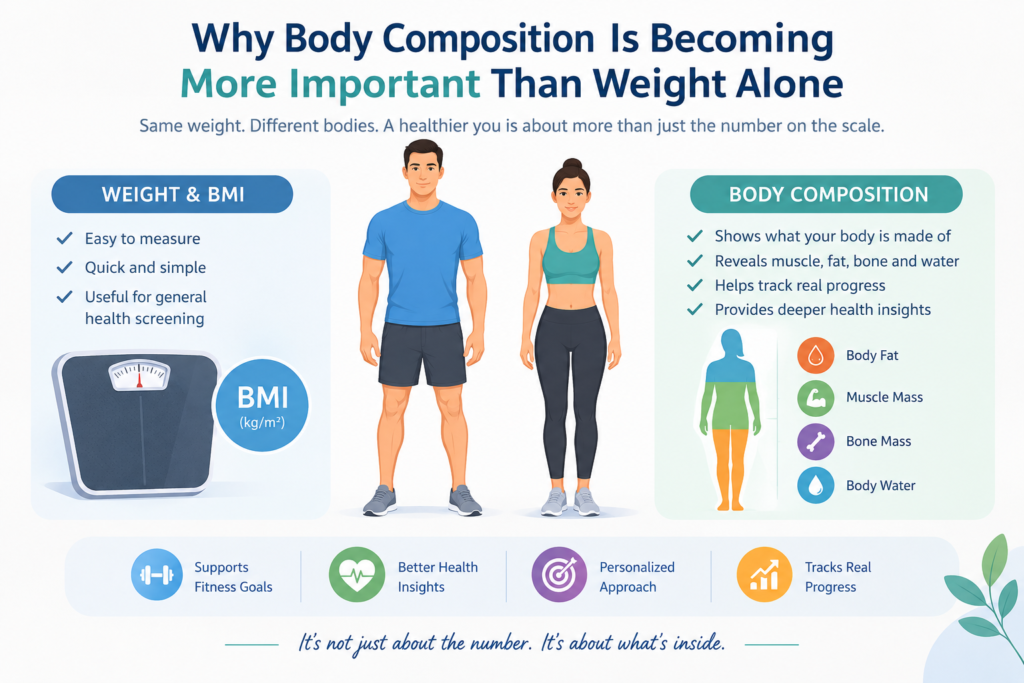
Weight has long been one of the simplest ways to track changes in the body. Step on a scale, record the number, and compare it with your previous measurement. The problem is that body composition tells a more detailed story. Two people can have the same height and weight while having very different amounts of body fat, muscle, bone, and other lean tissue.
That is why body composition vs weight is becoming an increasingly useful distinction when people think about health, fitness, and physical progress. Weight still matters, and BMI remains a practical screening measure, but neither tells you exactly what your body is made of.
What Is Body Composition?
Body composition refers to the proportions of different components that make up your body. These components are commonly considered in terms of fat mass and fat-free mass, with the latter including tissues such as muscle, bone, organs, and body water.
A body composition assessment can therefore provide information that a bathroom scale cannot. Instead of showing only total body weight, body composition analysis can estimate or measure characteristics such as:
- Body fat
- Fat-free mass
- Muscle mass
- Body water
- Bone mineral content
- Fat distribution
The exact information available depends on the measurement method. Some techniques provide relatively simple estimates, while others can provide more detailed measurements of body tissues. Methods used in research and clinical settings include dual-energy X-ray absorptiometry (DXA), bioelectrical impedance analysis, air displacement methods, and other techniques. Each has its own strengths, limitations, cost, and level of accuracy.
Why Is Body Composition Important?
The importance of body composition comes from the fact that total weight does not reveal how that weight is distributed.
Consider two adults who are the same height and weigh exactly 180 pounds. One might have considerably more muscle and less body fat, while the other might have less muscle and more fat. Their scale readings are identical, but their physical characteristics are not.
This is one reason body composition and weight should not automatically be treated as interchangeable measures.
Body composition can be useful when assessing:
- Changes in body fat
- Changes in muscle mass
- Fitness progress
- Nutritional goals
- Changes associated with aging
- Fat distribution
- Changes that are not obvious from body weight alone
It also provides context for interpreting other measurements. For example, BMI is based on height and weight and does not directly measure body fat or distinguish fat mass from lean mass.
Body Composition vs BMI: What’s the Difference?
The comparison of body composition vs BMI is important because these measurements answer different questions.
BMI is calculated from weight relative to height. For adults, it is commonly used as a screening measure for weight categories. It is inexpensive, quick, and easy to calculate, which makes it useful in healthcare and population-level assessments. However, BMI does not directly measure body fat, distinguish muscle from fat, or show where fat is stored.
Body composition, on the other hand, attempts to describe what makes up a person’s weight.
| Measure | What it tells you |
|---|---|
| Weight | Total body mass |
| BMI | Weight relative to height |
| Body fat percentage | Estimated proportion of body weight that is fat |
| Lean mass | Estimated or measured non-fat mass |
| Waist circumference | An indicator related to abdominal fat distribution |
| Body composition analysis | Information about different components of body mass |
Neither BMI nor body composition should automatically be treated as a complete measure of health. Instead, each provides different information that can be considered alongside other factors.
For example, the CDC notes that BMI should be considered with other information such as physical examination findings, blood pressure, cholesterol, and other health factors.
Why Is Body Composition Not Related to Weight in a Simple Way?
Body composition is related to weight, but the relationship is not as simple as “higher weight means more body fat.”
Your total weight is made up of multiple components. If you gain muscle while losing fat, your scale weight might change very little even though your body composition changes substantially.
The opposite can also happen. A person may lose weight while losing both fat and muscle. The scale shows progress, but the number alone does not tell you which tissues were lost.
This is why body composition vs weight is not really a choice between two completely unrelated measurements. Weight is one part of the picture; body composition provides additional detail about what contributes to that weight.
A Simple Example
Imagine someone begins resistance training while making moderate dietary changes.
Over several months:
- Body fat decreases
- Muscle mass increases
- Body weight changes only slightly
A person looking only at the scale might conclude that little has changed. A body composition assessment could reveal a much more meaningful change.
This is often why improving body composition can be a more useful goal than focusing exclusively on a lower number on the scale.
Why Body Composition Matters for Fitness Goals
For people who exercise regularly, changes in body composition can provide useful context for progress.
Strength training, adequate nutrition, and consistent physical activity can influence muscle mass and body fat independently of total weight. Someone trying to become stronger may care about maintaining or gaining muscle, while someone working toward a fat-loss goal may want to reduce excess fat without unnecessarily losing lean mass.
This does not mean that body weight is irrelevant. Weight can still be useful for monitoring trends over time. It simply means that body composition goals can provide additional information about what is happening underneath the scale reading.
For example, useful goals might include:
- Maintaining muscle while reducing excess fat
- Building muscle while keeping fat gain under control
- Preserving lean mass during weight loss
- Monitoring changes during a structured fitness program
What Does Improve Body Composition Mean?
People often ask, “What does improve body composition mean?”
In general, improving body composition means creating a more favorable balance between fat mass and lean mass according to your individual goals and health needs.
For one person, that might mean reducing excess body fat while preserving muscle. For another, it might mean gaining muscle while maintaining a relatively stable level of body fat.
There is no single body composition target that applies equally to every person. Age, sex, activity level, health status, genetics, and individual goals can all influence what is appropriate.
How Can You Improve Body Composition?
Improving body composition generally involves sustainable habits rather than focusing exclusively on rapid changes in scale weight.
Common components include:
Resistance Training
Strength or resistance training provides a stimulus for maintaining and developing muscle. It can be an important part of a program designed to improve body composition.
Adequate Nutrition
Nutrition provides the energy and nutrients needed to support physical activity and maintain body tissues. Protein is particularly important for muscle maintenance and development, although overall dietary quality and energy intake also matter.
Regular Physical Activity
A combination of resistance exercise and aerobic activity can support overall health and fitness. The appropriate amount and type of activity depends on the individual.
Consistency
Body composition changes usually take time. Looking at trends over weeks and months is generally more informative than reacting to a single measurement.
Can You Improve Body Composition Without Losing Weight?
Yes. Body composition changes do not always produce large changes in total body weight.
For example, if someone loses some fat while gaining a similar amount of lean mass, their total weight may remain relatively stable. This is sometimes described as body recomposition.
This explains why a person can look or feel different, become stronger, or experience changes in body measurements without seeing a dramatic change on the scale.
However, body recomposition is not guaranteed, and the magnitude of change varies among individuals. It should not be assumed that every small change in body composition represents muscle gain or fat loss because measurement methods themselves have limitations.
How Is Body Composition Measured?
A body composition measurement can be performed using several different techniques.
Bioelectrical Impedance Analysis
Bioelectrical impedance analysis, or BIA, estimates body composition by measuring how electrical currents move through the body. Many consumer scales use this technology.
It is convenient, but results can be influenced by factors such as hydration and the assumptions built into the device’s prediction equations. Therefore, readings are best interpreted as estimates rather than absolute measurements.
DXA
Dual-energy X-ray absorptiometry, commonly called DXA or DEXA, can provide detailed information about bone mineral content, fat mass, and lean tissue. The CDC notes that DXA can precisely measure body composition, although it is more expensive and less widely available than simple measurements such as BMI.
Skinfold Measurements
Skinfold measurements use calipers to estimate subcutaneous fat at specific locations. Results depend partly on measurement technique and the equations used to interpret the measurements.
Circumference Measurements
Measurements such as waist circumference can provide additional information about body size and fat distribution. Waist size can be particularly useful when considered alongside BMI and other health indicators.
No single method is perfect for every person or purpose. Research on body composition measurement has identified limitations across different techniques, so results should be interpreted according to the method used.
Body Composition vs Weight: Which Should You Track?
The answer depends on your goal.
If you want to monitor a general weight trend, a scale is simple and practical. If you want to understand changes in fat and lean tissue, body composition measurements can provide additional information.
For many people, using several measurements together can be more informative than relying on one number.
Depending on the situation, this might include:
- Body weight
- BMI
- Waist circumference
- Body composition estimates
- Strength or fitness performance
- Relevant health measurements
- Changes over time
The goal is not to replace weight with a different number. It is to understand what the numbers can and cannot tell you.
Does Body Composition Matter More Than Weight?
The phrase “body composition matters more than weight” can be useful when emphasizing the limitations of the scale, but it should not be interpreted as meaning weight has no value.
Weight remains a practical measurement, and changes in body weight can be clinically relevant. BMI also remains a useful screening tool because it is simple, inexpensive, and associated with various health risks.
The bigger point is that body composition adds context.
A scale can tell you how much you weigh. BMI can relate that weight to your height. Body composition can provide additional information about the tissues contributing to that weight.
These measurements answer different questions.
When Should You Focus on Body Composition?
Body composition may be particularly useful when your goal involves changing the proportion of fat and lean tissue rather than simply changing scale weight.
For example, it may be useful when:
- Starting a resistance-training program
- Tracking progress during a fat-loss program
- Trying to preserve muscle during weight loss
- Evaluating changes in fitness
- Monitoring changes over longer periods
- Understanding why measurements and appearance may change differently
However, you do not necessarily need frequent body composition testing. Depending on your goals, simpler measurements and consistent tracking may provide enough information.
The Bottom Line
Body composition provides a more detailed view of what contributes to total body weight. Weight and BMI remain useful tools, but they cannot show exactly how much of a person’s weight comes from fat, muscle, bone, or other tissues.
Medical note: Body composition measurements are estimates or measurements made with specific techniques and should be interpreted in context. If you have a medical condition, significant weight changes, or concerns about your health, a qualified healthcare professional can help interpret your measurements.