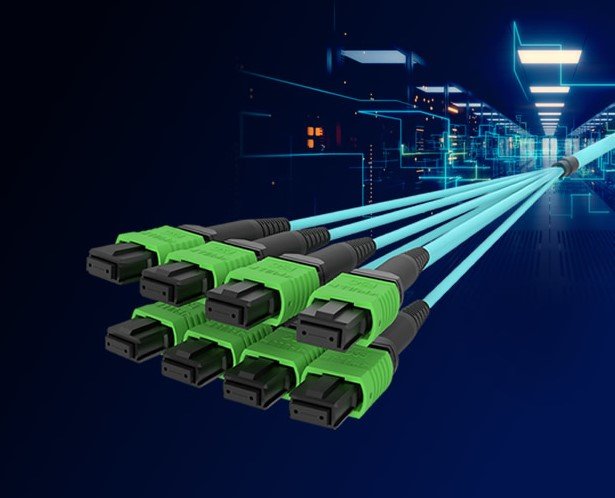

Modern communication infrastructure depends on fiber optic technology that can deliver high bandwidth, dependable signal transmission, and efficient use of physical space. As data centers, telecommunications networks, cloud platforms, and artificial intelligence infrastructure continue to expand, high-density fiber connectivity has become increasingly important. FSG Network specializes in fiber optic connectivity solutions, including precision components designed for demanding multi-fiber applications. One of its key product categories is the MT Ferrule, an important component used to accurately align multiple optical fibers within compact connector systems.
FSG Network focuses on the development and manufacturing of MT/MPO-related components, connectors, adapters, and cable assemblies. Its product portfolio includes ferrules supporting different fiber counts, including 12F, 16F, 24F, 32F, 36F, and 48F configurations, along with customized solutions. This broad range allows network designers, equipment manufacturers, and system integrators to select components according to their application requirements.
What Is an MT Ferrule?
An MT Ferrule is a precision fiber optic component designed to hold and align multiple optical fibers in a compact structure. MT stands for Mechanical Transfer, and the component is widely associated with high-density connector technologies such as MPO and MTP. A standard design commonly uses a compact square end face that positions multiple fibers with carefully controlled spacing, allowing the fibers to connect accurately with corresponding components.
The primary purpose of an MT Ferrule is accurate fiber alignment. When multiple optical fibers must be connected simultaneously, even very small alignment differences can affect optical performance. Precision manufacturing, fiber-hole positioning, guide-pin geometry, and dimensional consistency therefore play important roles in achieving dependable connectivity. FSG Network produces MT/MPO ferrules for applications where controlled alignment and high-density connectivity are essential.
Why MT Ferrules Matter in High-Density Networks
Traditional single-fiber connectivity requires individual alignment for each optical fiber, which can increase connector size and make large-scale installations more complicated. Multi-fiber ferrule technology addresses this challenge by allowing several fibers to be positioned within one compact component. This makes the technology particularly useful where network operators need to increase fiber density without proportionally increasing physical space.
High-density connectivity is especially important in modern data centers and other infrastructure environments where equipment racks contain a large number of optical links. By supporting multiple fibers within a compact connector architecture, MT ferrules can contribute to efficient cabling layouts and scalable network designs. FSG Network supplies ferrule configurations ranging from lower fiber counts to 48-fiber options, supporting different density requirements.
FSG Network MT Ferrule Product Options
FSG Network provides a broad selection of MT Ferrule configurations designed for different optical connectivity requirements. Its portfolio includes regular ferrules as well as shorter and specialized designs. Depending on the application, customers can select options for multimode or single-mode systems, different fiber counts, and different loss-performance requirements.
The company also provides customized ferrule solutions for specialized projects. Its product information identifies configurations from 12 to 48 fibers and indicates that custom designs are available. This flexibility can be valuable for manufacturers developing proprietary connector assemblies or network equipment that requires dimensions or configurations outside common standard products.
Precision Alignment and Guide Pin Technology
Accurate alignment is one of the most important factors in multi-fiber connectivity. MT ferrules use fiber holes and guide-pin holes to help position the mating components correctly. During connector mating, guide pins enter corresponding holes and help establish the precise relationship required between the two ferrules.
FSG Network also provides guide pins and inspection processes for its MT ferrule solutions. Its product information describes high-precision inspection of fiber holes and male-pin holes to verify dimensional characteristics. This type of inspection is important because the quality of the ferrule and guide-pin interface can directly influence the consistency of multi-fiber connections.
Materials and Manufacturing Quality
The material used in an MT Ferrule must maintain dimensional stability while operating across demanding environmental conditions. FSG Network identifies glass-filled polyphenylene sulfide, or PPS, as a material used for its ferrule products. PPS is valued for characteristics such as dimensional stability and low moisture absorption, which are useful for precision optical components.
Manufacturing consistency is equally important. Fiber holes, guide-pin holes, fiber pitch, and other dimensions need to remain within controlled tolerances to support dependable optical alignment. FSG Network states that its manufacturing and inspection processes are designed around precision, while its broader quality program includes testing against recognized fiber-optic industry requirements.
Standard and Ultra-Low-Loss Solutions
Different networks have different optical performance requirements. Standard ferrules can support common high-density fiber applications, while low-loss and ultra-low-loss configurations are designed for applications where minimizing insertion loss is particularly important. FSG Network lists standard, low-loss, and ultra-low-loss options within its product range.
Ultra-low-loss MT ferrule solutions are particularly relevant to high-performance infrastructure such as advanced data centers, artificial intelligence clusters, and high-speed optical interconnects. FSG Network describes ULL products for applications involving 400G, 800G, and emerging 1.6T network environments. These applications require carefully controlled optical interfaces because network performance depends on maintaining signal quality throughout complex high-bandwidth links.
APC and UPC Polishing Options
Polishing configuration is another important consideration when selecting an MT ferrule for an optical application. FSG Network offers both UPC and APC polishing options, giving customers flexibility when matching ferrules to particular connector and transmission requirements.
The company also highlights pre-angled APC solutions, including a 12-fiber single-mode configuration. A pre-angled design can simplify certain assembly processes because the required angle is incorporated into the component. This approach can be useful for manufacturers seeking repeatable assembly and controlled optical performance in high-density single-mode connectivity systems.
Applications of FSG Network MT Ferrules
MT Ferrule technology is used across several industries that require high-density optical connectivity. Data centers use multi-fiber connector systems to connect servers, switches, storage equipment, and other infrastructure. Telecommunications networks can also use these components in high-bandwidth optical systems, while active optical cables and optical transceivers can incorporate multi-fiber ferrule technology for compact connectivity.
Artificial intelligence and high-performance computing environments create additional demand for dense optical interconnects. These systems can contain large numbers of high-speed connections, making compact and accurately aligned fiber components valuable. FSG Network’s MT/MPO product portfolio is intended to support applications ranging from conventional data center infrastructure to newer high-performance network architectures.
Why Choose FSG Network for MT Ferrule Solutions?
FSG Network has positioned itself as a global supplier focused on MPO and MT connectivity technologies. In addition to ferrules, the company provides MPO connectors, adapters, cable assemblies, and related components, allowing customers to source multiple parts of a high-density optical connectivity system from one supplier.
The company states that its manufacturing capacity has expanded significantly and that it supports standard as well as customized ferrule designs. FSG Network also maintains engineering and research capabilities related to precision molding and fiber optic technologies. For customers developing specialized network equipment or large-scale connectivity projects, this combination of product variety, manufacturing capability, inspection, and customization can simplify component sourcing.
Choosing the Right MT Ferrule for Your Application
Selecting an MT Ferrule requires consideration of several technical factors. Fiber count, single-mode or multimode operation, insertion-loss requirements, polishing type, guide-pin configuration, dimensions, and connector compatibility can all influence the appropriate choice. Project designers should also consider the operating environment and the requirements of the equipment into which the ferrule will be integrated.
FSG Network offers multiple configurations intended to address different application needs. Its portfolio includes standard and short designs, different fiber counts, low-loss and ultra-low-loss options, and customized solutions. By evaluating the optical and mechanical requirements before ordering, manufacturers and integrators can select a ferrule configuration that aligns with their specific connectivity architecture.
Conclusion
As optical networks continue moving toward greater bandwidth and higher fiber density, precision multi-fiber components remain an important part of modern connectivity infrastructure. An MT Ferrule provides a compact method of holding and aligning multiple fibers, helping connector systems achieve controlled optical interfaces while supporting dense network architectures. Its role extends across data centers, telecommunications, high-performance computing, active optical cables, and other high-bandwidth applications.
FSG Network combines a broad MT/MPO product portfolio with manufacturing, inspection, engineering, and customization capabilities. From standard configurations to low-loss, ultra-low-loss, pre-angled, and custom solutions, the company provides options for a variety of fiber connectivity requirements. For organizations developing scalable optical infrastructure, FSG Network’s MT ferrule solutions offer a component-focused approach to building compact, high-density, and precision-oriented fiber optic systems.