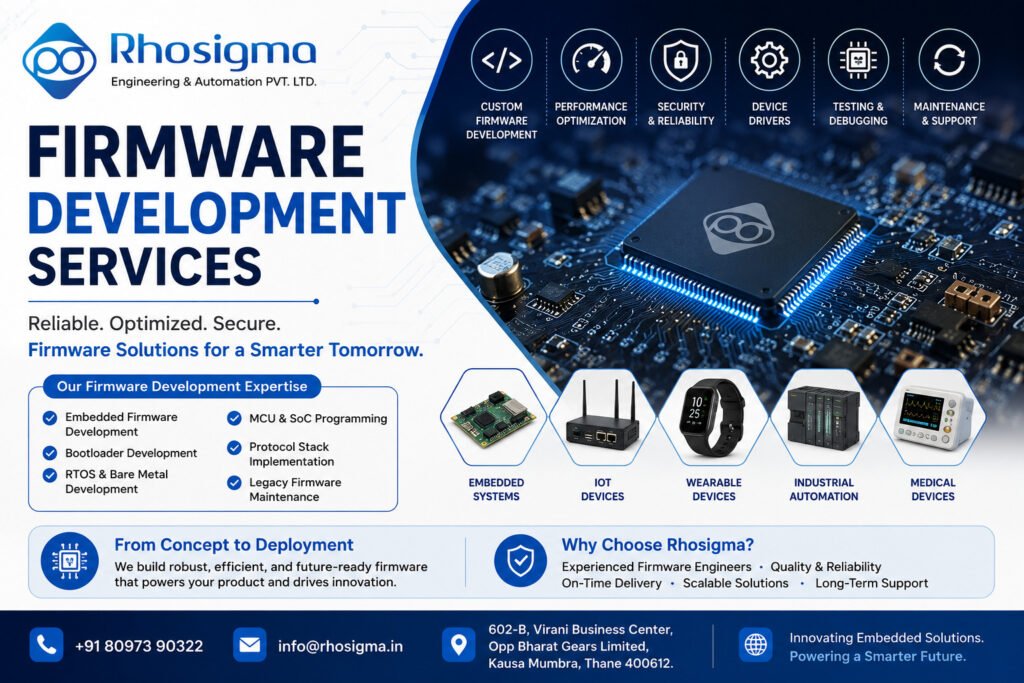

Every smart device you use, from a fitness band to a factory sensor, has a small piece of software working quietly inside it. This software is called firmware, and it decides how the hardware behaves. If the firmware is slow, buggy, or insecure, even the best hardware will disappoint users. That is why more companies are turning to custom firmware development services to build reliable products.
This guide explains what custom firmware is, why it matters, and how to choose the right development partner.
What Is Firmware?
Firmware is the low-level code stored on a device’s memory chip. It tells the microcontroller how to read sensors, control motors, talk to other devices, and manage power. Unlike an app on your phone, firmware is tied closely to the hardware it runs on, and users rarely see it.
Think of hardware as the body of a product and firmware as its nervous system. Without it, the body cannot respond to anything.
Why Custom Firmware Instead of Ready-Made Code?
Off-the-shelf firmware and open-source libraries can work for simple prototypes. But most real products need something more specific. Here is why custom firmware is often the better choice:
Built for your exact hardware. Code is written around your chosen chip, sensors, and board design, so nothing is wasted.
Better performance. Optimised code runs faster and uses less memory.
Longer battery life. Careful power management can extend battery life from days to months.
Stronger security. Custom code lets you add encryption, secure boot, and protected updates from day one.
Full ownership. You control the code, the roadmap, and future changes.
What Do Custom Firmware Development Services Include?
A good firmware team covers the full journey, not just writing code. Typical services include:
1. Requirement analysis. Engineers study what the product must do, which chip it uses, and what limits exist, such as memory, speed, and power.
2. Architecture design. The team plans how the code will be organised. A clean structure makes the firmware easier to test, update, and expand.
3. Driver and board support development. Drivers allow the firmware to communicate with sensors, displays, memory, and other components on your board.
4. Application logic. This is the main behaviour of the product, such as reading data, making decisions, and responding to user actions.
5. Connectivity features. Many products need Wi-Fi, Bluetooth, LoRa, Zigbee, or cellular communication. Firmware engineers set these up and make them stable.
6. RTOS integration. For products that handle many tasks at once, a real-time operating system keeps everything running on time.
7. Testing and debugging. Firmware is tested on real hardware under different conditions, including low battery, weak signals, and unexpected inputs.
8. Over-the-air (OTA) updates. OTA lets you fix bugs and add features after the product has been sold, without recalling devices.
9. Long-term maintenance. Products live for years, so firmware needs regular updates and support.
Common Firmware Mistakes to Avoid
Many product teams face the same problems. Knowing them early can save a lot of time and money.
Starting to code before defining requirements. Changing the plan midway causes rewrites.
Ignoring power use. Code that keeps the processor awake all the time will drain batteries quickly.
Skipping hardware testing. Simulations help, but real-world testing finds problems that simulations miss.
Treating security as an extra. Connected devices are targets. Security must be planned from the start.
No update plan. A product without a safe update method becomes hard to fix once it is in the field.
Industries That Rely on Custom Firmware
Custom firmware is used almost everywhere electronics are found:
Consumer electronics: wearables, smart home gadgets, and audio devices
Industrial automation: sensors, controllers, and monitoring systems
Healthcare: portable monitors and diagnostic equipment
Automotive: control modules and tracking devices
Agriculture and energy: smart meters, irrigation controllers, and solar systems
How to Choose the Right Firmware Development Partner
Not every team is the right fit for your product. Before you decide, look for these things:
Relevant experience. Ask for examples of similar products or chips they have worked with.
Hardware and firmware skills together. Teams that understand both sides solve problems faster.
A clear process. Good partners explain their stages, testing methods, and documentation.
Open communication. Regular updates and honest feedback prevent surprises.
Code ownership and documentation. Make sure you receive the full source code and clear notes when the project ends.
Post-launch support. Bugs and new requirements appear after release, so ongoing support matters.
If you are also designing the electronics, working with a company that offers both firmware and hardware development services can make the whole project smoother, because one team handles the board and the code together.
Trends Shaping Firmware Development
Firmware is changing quickly. A few trends worth watching:
Edge AI: Small machine learning models now run directly on low-power chips.
Secure by design: Secure boot and encrypted updates are becoming standard.
Rust and modern languages: Teams are exploring safer alternatives to traditional C for fewer memory bugs.
Matter and IoT standards: Common standards make it easier for devices from different brands to work together.
Final Thoughts
Great products are not defined by hardware alone. Reliable, efficient, and secure firmware is what makes a device feel smooth and trustworthy. Investing in custom firmware development services helps you launch faster, avoid expensive fixes, and keep improving your product long after release.
Start with clear requirements, test on real hardware early, plan for updates, and choose a partner who understands your goals. With the right approach, your product will perform well on day one and stay dependable for years.