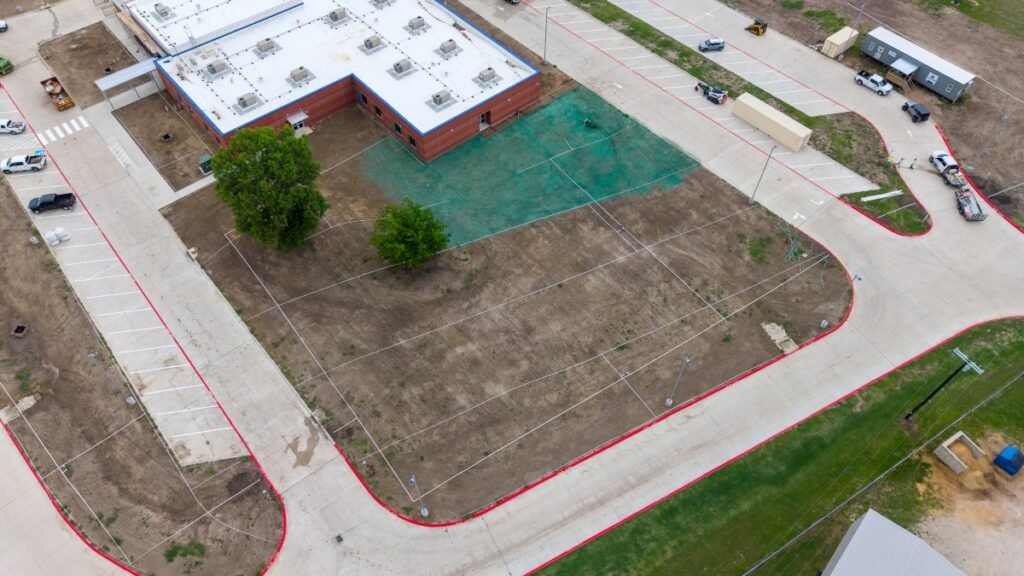

Commercial property owners often face an important decision when establishing new turf: should they install sod immediately or use hydroseeding to grow grass from seed? Both methods can produce attractive and functional landscapes, but they differ significantly in installation speed, cost, maintenance, soil preparation, and long-term establishment. Understanding these differences allows property managers and contractors to choose a method that matches the site’s budget, schedule, climate, and intended use.
A hydroseeding mixture typically combines grass seed, mulch, water, and other materials selected for the site’s growing conditions. Commercial hydroseeding services are commonly considered for large properties because the application process can efficiently cover extensive areas. Sod, by comparison, consists of mature turf that is grown elsewhere and transported to the property in rolls or sections. The right choice depends less on which method is universally better and more on which approach fits the project’s specific requirements.
Initial Cost and Installation Efficiency
Cost is often one of the first considerations for commercial landscaping projects. Sod generally has higher upfront material and installation expenses because the turf has already been grown, harvested, transported, and installed. Labor can also be significant because sod must be carefully positioned, fitted around obstacles, and pressed against the prepared soil. For large commercial properties, these costs can increase substantially as the total installation area expands.
Hydroseeding can offer a more economical approach for expansive areas because seed and application materials can be distributed efficiently over large sections of prepared ground. The final price still depends on acreage, seed selection, soil preparation, mulch, accessibility, grading, and other project requirements. Contractors should compare complete project estimates rather than assuming that hydroseeding will always be cheaper. A properly prepared site and suitable seed blend can influence both the initial investment and the long-term value of the installation.
Speed of Results and Project Scheduling
Sod has a major advantage when immediate visual results are important. Once installed correctly and watered, sod creates an established-looking lawn almost immediately. This can be valuable for commercial properties preparing for an opening, event, inspection, property sale, or customer-facing launch. However, newly installed sod still needs time to develop strong roots into the underlying soil, so it should not automatically be treated as fully established simply because the surface appears green.
Hydroseeding requires more patience because the grass must germinate and develop before the property reaches a mature appearance. Germination speed varies according to grass species, temperature, moisture, soil conditions, and other environmental factors. Although this means hydroseeding does not provide the instant appearance of sod, it can be highly practical when a project schedule allows time for natural establishment. Proper irrigation and protection from traffic during early growth are essential for achieving consistent results.
Root Development and Long-Term Establishment
Root development is an important consideration when comparing sod and hydroseeding. Sod begins with mature grass and an existing root system, but the roots must transition into the site’s soil after installation. Successful establishment depends on close contact between the sod and prepared soil, adequate moisture, and suitable growing conditions. Poor soil preparation or inadequate watering can create gaps between the turf and underlying soil, potentially slowing establishment or causing sections of the lawn to decline.
Hydroseeding starts with seed, allowing the resulting plants to develop their root systems directly within the prepared soil. This can provide a strong foundation when the seedbed has been properly prepared and environmental conditions support growth. The advantage is not automatic, however, because compacted soil, unsuitable seed selection, poor drainage, or inadequate irrigation can negatively affect development. Professional installation focuses on creating conditions that give emerging grass the best opportunity to establish healthy roots.
Coverage, Terrain, and Commercial Site Conditions
Commercial properties frequently contain large open spaces as well as slopes, drainage areas, medians, roadside sections, and irregularly shaped landscapes. Installing sod across complicated terrain can involve considerable cutting, fitting, handling, and transportation. While sod remains useful for many difficult locations, the labor involved can increase as site complexity grows. Contractors must also carefully manage seams and edges to create a consistent finished appearance.
Hydroseeding can be particularly adaptable to large or irregular areas because the slurry is sprayed across the prepared surface. Equipment can distribute the mixture over broad spaces while hoses can help reach areas that may be difficult for traditional application methods. This makes commercial hydroseeding services worth considering for large developments, commercial campuses, open fields, and certain erosion-control applications. Nevertheless, steep slopes or areas with significant runoff may require additional erosion-control measures beyond hydroseeding itself.
Maintenance Requirements After Installation
Neither sod nor hydroseeding eliminates the need for proper lawn care. Newly installed sod requires regular watering during its initial establishment period to prevent drying and encourage roots to grow into the underlying soil. Heavy traffic should generally be minimized until the turf is adequately rooted. Once established, maintenance typically includes mowing, irrigation, fertilization based on site needs, weed management, and monitoring for pests or disease.
Hydroseeded lawns also require careful attention during their early development. Consistent moisture is particularly important while seeds are germinating and young grass is becoming established. Overwatering can create runoff and soil disturbance, while insufficient moisture can reduce germination and leave thin areas. After establishment, hydroseeded turf follows many of the same maintenance practices as conventional lawns. The long-term maintenance burden therefore depends heavily on the selected grass species and the property’s environmental and usage conditions rather than simply the installation method.
Comparing Hydroseeding With Residential Applications
Although commercial properties often require large-scale installation strategies, homeowners face similar decisions when creating or renovating lawns. People searching for residential hydroseeding near me may be considering hydroseeding because it can efficiently establish vegetation across yards, new construction sites, slopes, or areas where conventional seeding may be inconvenient. The same fundamental principles apply: soil preparation, appropriate seed selection, moisture management, and proper timing all influence results.
The primary difference is usually scale and project complexity. Commercial sites may require extensive coordination with construction crews, drainage systems, access routes, landscaping plans, and business-opening deadlines. Residential projects are often smaller and may allow homeowners greater flexibility with installation schedules. Comparing both applications demonstrates why hydroseeding should be evaluated according to the property’s actual conditions rather than treated as a universal replacement for sod or traditional seeding.
Making a Data-Driven Commercial Decision
When comparing sod and hydroseeding, commercial property owners should evaluate several measurable factors rather than focusing only on appearance during the first few days. Consider the total installed cost, acreage, labor requirements, installation timeline, expected establishment period, irrigation availability, soil conditions, traffic levels, maintenance capabilities, and long-term landscape objectives. Sod tends to excel when immediate visual coverage is the priority, while hydroseeding can be advantageous when large areas, cost efficiency, and natural root establishment are more important.
The property’s location and growing environment should also influence the final decision. Grass species must be selected according to local climate, soil, sunlight, moisture, and intended use. A professional contractor can assess these variables and explain whether sod or hydroseeding is more appropriate for the site. When evaluating commercial hydroseeding services, property managers should request detailed proposals that identify preparation work, seed varieties, application materials, irrigation expectations, and follow-up requirements.
Ultimately, there is no single installation method that is ideal for every commercial property. Sod provides immediate visual coverage and can be valuable when deadlines demand an established-looking landscape, while hydroseeding offers efficient application across large areas and allows grass to establish directly within prepared soil. The better option depends on project goals, budget, site conditions, schedule, and maintenance resources. By comparing these factors objectively and working with an experienced landscaping professional, commercial property owners can select the approach that provides practical value and dependable long-term turf performance.